
Centrend

business technology

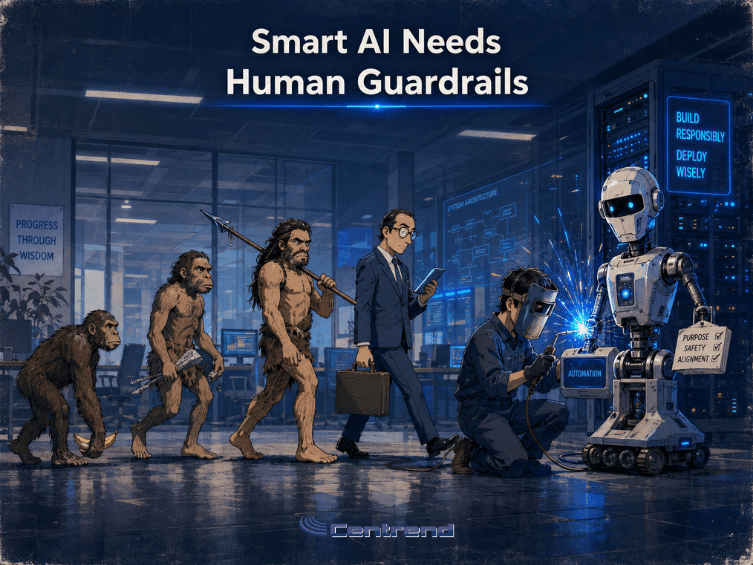
Smart AI Needs Human Guardrails illustration showing the evolution from early humans to a modern worker and a robot in a blue-toned IT office with servers and human oversight.

Smart AI Needs Human Guardrails

Smart AI use starts with one simple rule: it should not run without human guardrails. Businesses are using it to draft emails, summarize notes, organize ideas, support customer communication, and speed up daily work. That can save time, but it also creates one important question: Who is checking what it produces? Without clear rules, teams can accidentally expose sensitive information, trust incorrect answers, or use content that does not match the company’s standards. That is where risk begins. Why this matters AI can sound confident even when it is wrong. A polished answer is not always accurate. A fast draft is not always safe. A helpful summary may still miss important details. For businesses, this matters because one careless use can affect customers, internal decisions, data privacy, and trust. The goal is not to avoid AI. The goal is to use it with security, accuracy, and human review. 1. Protect sensitive data Not everything belongs in an AI tool. Teams should avoid entering customer information, passwords, financial details, private company documents, HR information, legal content, or anything confidential. A simple rule helps: If it should not be public, do not paste it into a public tool. 2. Check every important answer AI-generated content should never be accepted automatically. It can be incomplete, outdated, or simply wrong. Before using the output, your team should check facts, confirm details, and review anything that could affect a customer, project, report, or business decision. Fast is helpful. Correct is essential. 3. Keep people in control AI should support your team, not replace judgment. People still need to decide what is accurate, appropriate, useful, and aligned with the business. This matters most for customer replies, marketing content, reports, policies, and anything connected to your reputation. Human review is not extra work. It is the safety step. 4. Set clear rules for the team A safer AI process should be simple enough for everyone to follow. Your business should define: What AI can be used forWhat information should never be enteredWhich tools are approvedWho reviews the final outputWhen approval is required Clear rules reduce confusion and help teams use AI more consistently. 5. Make AI fit your business AI works better when it is built around your actual workflow. That means it should support your brand voice, customer response process, internal standards, and team responsibilities. The real value is not just using AI. The real value is using it in a way that fits how your business works. The bottom line AI can help businesses move faster. But speed without control creates risk. The smart approach is simple: Protect sensitive data.Check the output.Keep people involved.Set clear rules.Use approved tools. With the right guardrails, AI can help your team work with more confidence, better accuracy, and stronger protection. Use AI with confidence, not guesswork. Centrend can help your business create safer AI workflows, protect sensitive information, and build smarter technology processes that support the way your team works. Talk to Centrend About Safer AI Use

Smart AI Needs Human Guardrails Read More »
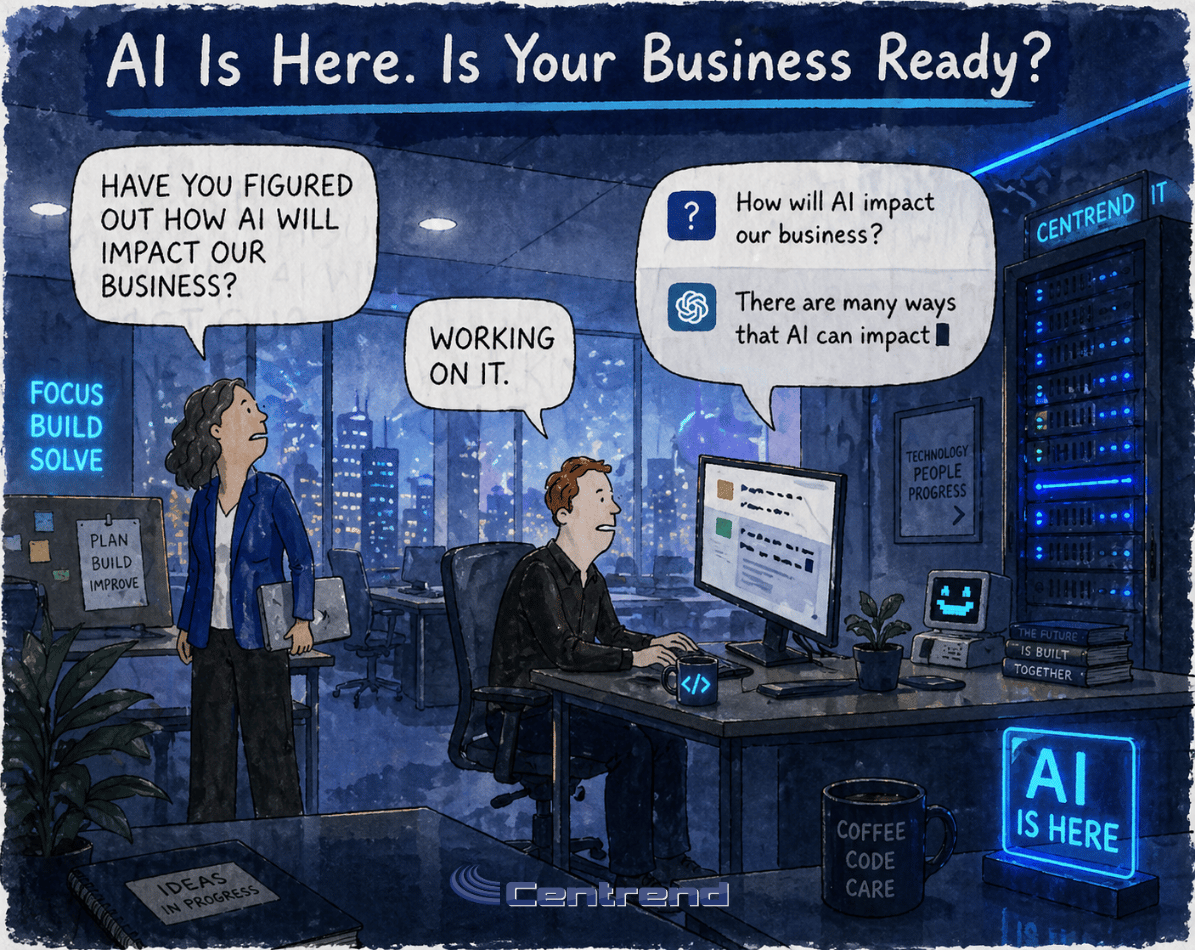
AI is here in a modern IT office scene showing a team exploring how AI can impact business workflows, planning, and technology strategy.

AI Is Here. Is Your Business Ready?

AI is here, and it is no longer something only big companies use. This technology is already showing up in daily work. Employees use it to write emails, summarize notes, research topics, create reports, organize ideas, and speed up customer responses. The real question is not whether your business will use it. The real question is whether your team is using it safely, clearly, and with the right process. Why it matters AI can save time. It can help your team move faster, reduce repetitive work, and make daily tasks easier. But without clear guidelines, it can also create problems. Employees may paste sensitive company information into public tools. They may rely on answers that are not fully accurate. They may send generated content without checking the tone, facts, or privacy risks. That is where businesses need to be careful. This technology is useful, but it still needs human review. Where it can help right now For many small and mid-sized businesses, AI can support simple daily work such as: Writing and editingIt can help draft emails, improve wording, create outlines, and turn rough ideas into clearer messages. Research and summariesIt can help organize information, summarize long notes, and give teams a faster starting point. Customer service supportIt can help draft replies, organize common questions, and support faster response times. Planning and admin workIt can help create checklists, meeting agendas, task summaries, and internal process notes. Marketing and content ideasIt can help brainstorm topics, create first drafts, and adjust content for different platforms. The value is not in replacing your team. The value is helping your team spend less time staring at a blank page and more time making good decisions. The risk of using AI without rules AI can sound confident even when it is wrong. That matters. A polished answer is not always an accurate answer. A fast draft is not always safe to send. A helpful summary may still miss important details. Businesses should be careful with: Sensitive customer dataCompany passwords or private documentsFinancial informationLegal or HR-related contentClient recordsUnverified factsCustomer-facing messages AI should support the work, not become the final decision-maker. The smarter way to use it Businesses do not need to avoid AI. They need a safe and simple approach. That means setting clear rules for what employees can and cannot enter into these tools. It also means reviewing generated content before it is used, especially for customer communication, business decisions, or anything involving sensitive information. A good process should answer three basic questions: What can our team use this for?What information should never be entered into these tools?Who reviews the final output before it is shared? When those rules are clear, AI becomes much more useful and much less risky. The bottom line This technology is already becoming part of everyday business. Used well, it can help your team work faster, write better, organize information, and reduce wasted time. Used carelessly, it can create confusion, privacy issues, and inaccurate work. The best approach is not to ignore it or rush into it without a plan. The best approach is to use AI with clear guidelines, human review, and the right technology support. At Centrend, we help businesses use technology in a practical, secure, and manageable way. If your team is starting to explore smarter tools, now is the time to make sure they are being used the right way. Make AI work the way your business works. Centrend can help you customize and implement AI tools that fit your brand, support your team, and improve daily operations. Talk to Centrend or Schedule an AI Implementation Consultation

AI Is Here. Is Your Business Ready? Read More »

Scroll to Top