
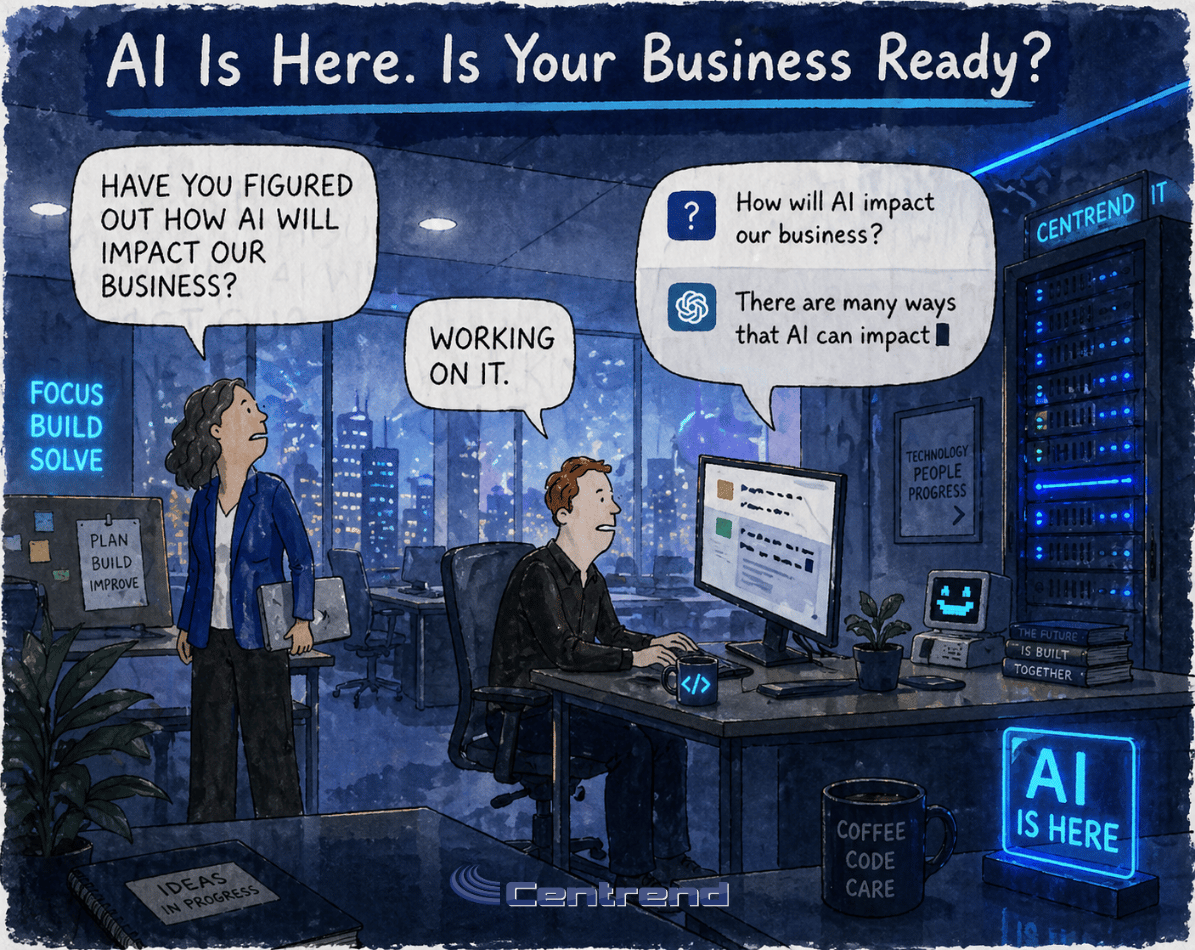
AI is here, and it is no longer something only big companies use.
This technology is already showing up in daily work. Employees use it to write emails, summarize notes, research topics, create reports, organize ideas, and speed up customer responses.
The real question is not whether your business will use it.
The real question is whether your team is using it safely, clearly, and with the right process.
Why it matters
AI can save time. It can help your team move faster, reduce repetitive work, and make daily tasks easier.
But without clear guidelines, it can also create problems.
Employees may paste sensitive company information into public tools. They may rely on answers that are not fully accurate. They may send generated content without checking the tone, facts, or privacy risks.
That is where businesses need to be careful.
This technology is useful, but it still needs human review.
Where it can help right now
For many small and mid-sized businesses, AI can support simple daily work such as:
Writing and editing
It can help draft emails, improve wording, create outlines, and turn rough ideas into clearer messages.
Research and summaries
It can help organize information, summarize long notes, and give teams a faster starting point.
Customer service support
It can help draft replies, organize common questions, and support faster response times.
Planning and admin work
It can help create checklists, meeting agendas, task summaries, and internal process notes.
Marketing and content ideas
It can help brainstorm topics, create first drafts, and adjust content for different platforms.
The value is not in replacing your team.
The value is helping your team spend less time staring at a blank page and more time making good decisions.
The risk of using AI without rules
AI can sound confident even when it is wrong.
That matters.
A polished answer is not always an accurate answer. A fast draft is not always safe to send. A helpful summary may still miss important details.
Businesses should be careful with:
Sensitive customer data
Company passwords or private documents
Financial information
Legal or HR-related content
Client records
Unverified facts
Customer-facing messages
AI should support the work, not become the final decision-maker.
The smarter way to use it
Businesses do not need to avoid AI.
They need a safe and simple approach.
That means setting clear rules for what employees can and cannot enter into these tools. It also means reviewing generated content before it is used, especially for customer communication, business decisions, or anything involving sensitive information.
A good process should answer three basic questions:
What can our team use this for?
What information should never be entered into these tools?
Who reviews the final output before it is shared?
When those rules are clear, AI becomes much more useful and much less risky.
The bottom line
This technology is already becoming part of everyday business.
Used well, it can help your team work faster, write better, organize information, and reduce wasted time.
Used carelessly, it can create confusion, privacy issues, and inaccurate work.
The best approach is not to ignore it or rush into it without a plan.
The best approach is to use AI with clear guidelines, human review, and the right technology support.
At Centrend, we help businesses use technology in a practical, secure, and manageable way. If your team is starting to explore smarter tools, now is the time to make sure they are being used the right way.
Make AI work the way your business works.
Centrend can help you customize and implement AI tools that fit your brand, support your team, and improve daily operations.
Talk to Centrend or Schedule an AI Implementation Consultation