One Missed Update Can Become Business Risk
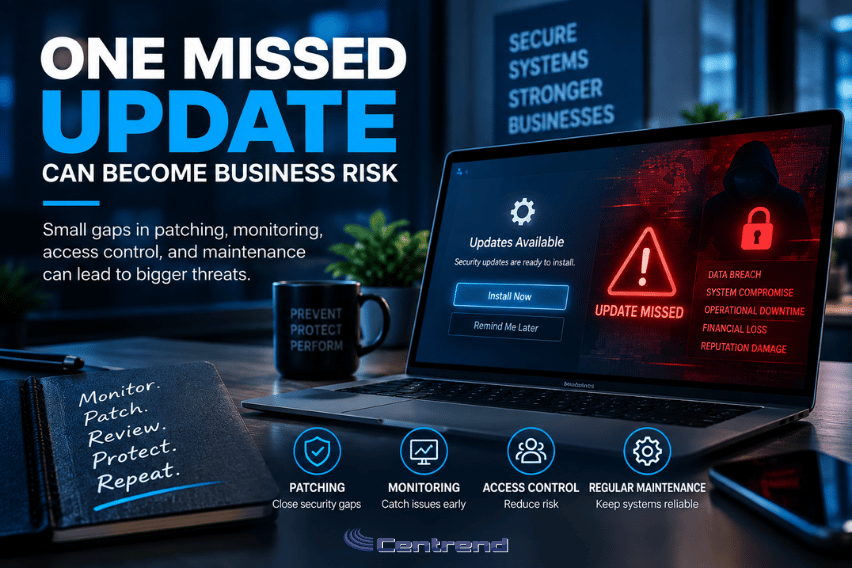
One Missed Update can seem harmless. A patch gets delayed.A system update is overlooked.An access permission stays unchanged. Nothing happens. Until it does. The problem Businesses rely on dozens of systems every day. Those systems need regular maintenance to stay secure, reliable, and available. When updates are missed, small gaps can become larger security and operational risks. One overlooked update can give a problem more time to grow. Small gaps can create bigger risks Cybersecurity is not just about stopping major attacks. It is also about keeping everyday technology maintained. That means: The goal is simple: Do not leave known problems waiting. Patching is part of protection Software updates often include security fixes. When those updates are delayed, businesses may continue operating with known weaknesses. That does not mean every missed update will lead to an incident. It does mean the business is carrying avoidable risk. Regular patching helps close the gap before it becomes a bigger problem. Access control matters too Updates are only one part of the picture. Who has access matters. Former employees.Old accounts.Unnecessary permissions.Shared credentials. Each one can create additional exposure. Regular access reviews help make sure people have the access they actually need. Less unnecessary access means fewer unnecessary risks. Monitoring catches what teams may miss Your team cannot manually watch everything. That is where proactive monitoring helps. Monitoring can help identify: The earlier an issue is identified, the more options a business has to address it. Maintenance should be proactive Waiting for something to break is not a cybersecurity strategy. A stronger approach is: Monitor. Patch. Review. Protect. Repeat. Regular maintenance helps businesses stay ahead of avoidable problems while keeping technology more reliable. The Centrend approach Centrend helps businesses take a more proactive approach to IT and cybersecurity. That includes helping businesses maintain: Because good IT support is not just about fixing what is broken. It is about reducing the chances of something breaking in the first place. Ready to reduce avoidable IT and cybersecurity risks? Talk to Centrend about proactive managed IT and cybersecurity support.
One Missed Update Can Become Business Risk Read More »