Why AI Adoption Needs Cybersecurity First
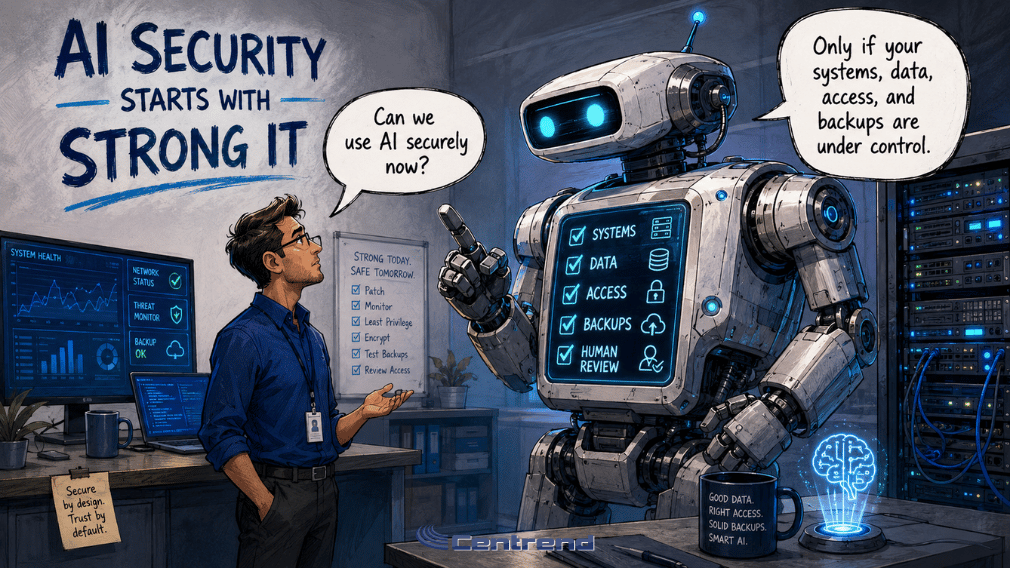
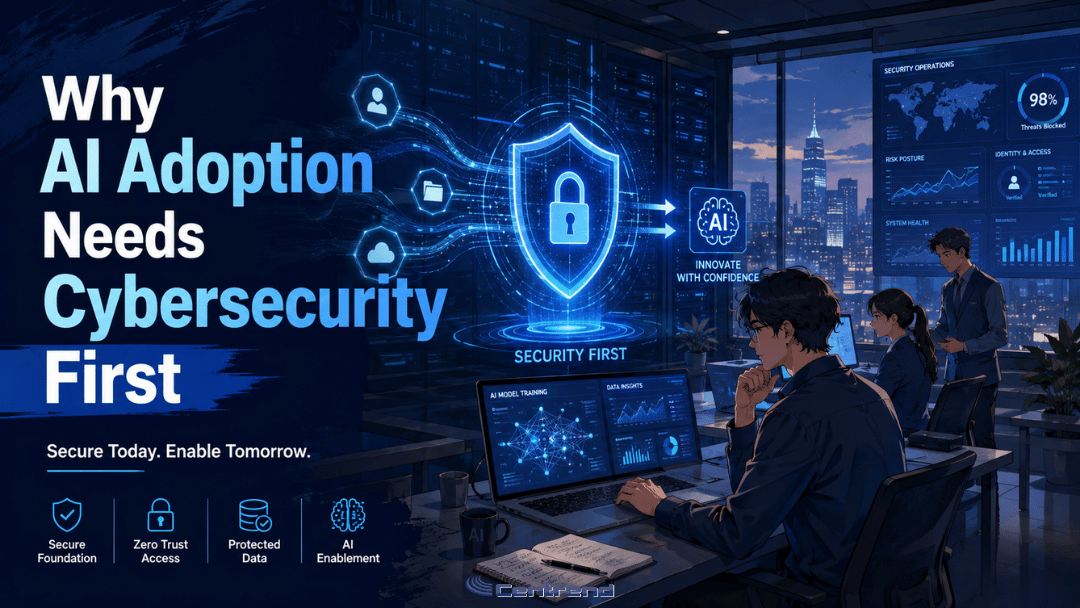
Why AI adoption needs cybersecurity first is simple: AI moves fast. So do the risks around it. Businesses are using AI to draft emails, summarize documents, analyze data, improve workflows, and support daily decisions. That can create real value. But if AI is added before the business protects its systems, data, access, and users, it can create new security gaps faster than the team can manage. AI should help the business move smarter. It should not create a new way for sensitive information, wrong answers, or weak controls to spread. The problem Many businesses start with the tool. They ask: What AI platform should we use? But the better question is: Are our systems secure enough to support AI? AI depends on the environment around it. If your data is messy, permissions are loose, employees are using public tools, backups are untested, or cybersecurity controls are weak, AI can make those problems more visible and more dangerous. A useful tool can quickly become a risky shortcut. Why this matters AI can touch sensitive parts of the business: Without cybersecurity first, teams may not know what information is being shared, where it is going, who can access it, or whether the output is safe to use. That creates risk. Not always loudly. Sometimes it shows up as a polished but incorrect answer. A private document copied into a public tool. A report built from the wrong data. A customer reply sent without review. A workflow that exposes more access than it should. AI needs secure access AI should not have unlimited access to business information. It should only reach what it needs. That means businesses need clear rules for: The goal is not to block AI. The goal is to use AI without losing control. AI needs clean and protected data AI is only as reliable as the information behind it. If AI pulls from outdated files, duplicate records, old policies, or scattered documents, it can create answers that sound correct but are not. Cybersecurity and data quality work together. Businesses need to know: Clean, protected data helps AI become more useful and less risky. AI needs employee guidance Employees may already be using AI to save time. That is not always a problem. The problem begins when there are no rules. Without guidance, employees may enter sensitive information into public tools, use unapproved platforms, or trust AI output without checking it. A practical AI policy should answer: Simple rules protect both the business and the team. AI needs monitoring and accountability Cybersecurity is not just prevention. It is also visibility. Businesses need to know how AI is being used, which tools are connected, and whether important outputs are being reviewed. AI should have accountability built into the process. That includes: If something goes wrong, the business should not be guessing what happened. The better approach Start with cybersecurity before scaling AI. Review the systems. Clean up the data. Approve the tools. Limit access. Protect backups. Train employees. Keep human review in place. Then expand carefully. AI adoption works best when the foundation is already secure. The bottom line AI can help businesses save time, improve workflows, and make information easier to use. But speed without security creates risk. Before adopting AI across the business, make sure the systems, data, access, and people behind it are ready. Cybersecurity should not come after AI adoption. It should guide it from the start. Build a safer path to AI adoption Centrend helps businesses strengthen cybersecurity, review systems, protect data, and create practical guidance before AI becomes part of daily work. Not sure if your business is ready to use AI securely? Contact Centrend to review your systems, data, access, and policies before small gaps become bigger risks. [Insert contact link]
Why AI Adoption Needs Cybersecurity First Read More »