Centrend

Phishing prevention

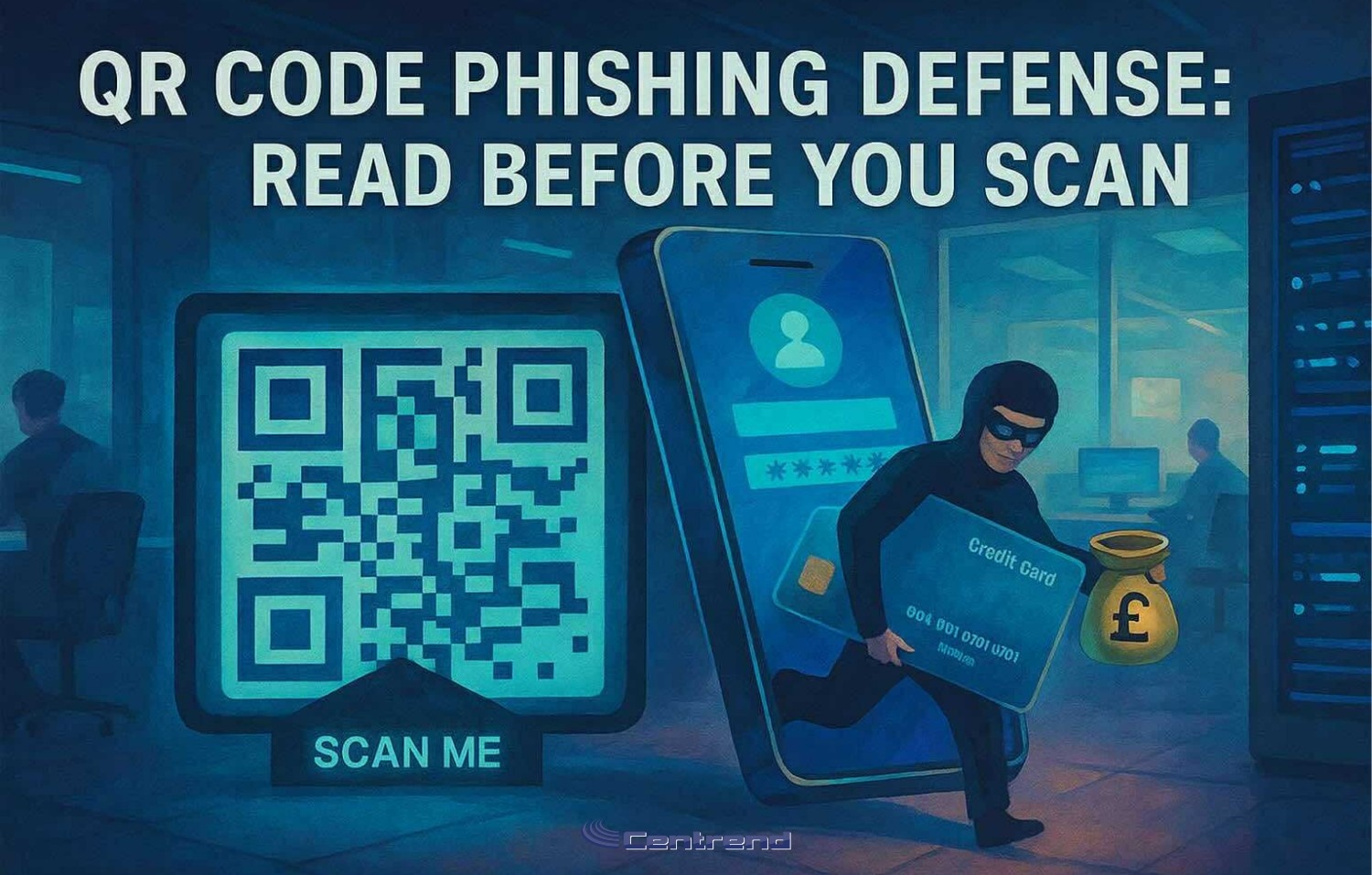
Illustration of a masked hacker stealing credit card data through a QR code scam, with a “Scan Me” sign and smartphone in a dark office setting

QR Code Phishing Defense: Read Before You Scan

QR Code Phishing Defense.One sticker. One poster. One scan.That’s all it takes for a credential theft or payment fraud. QR phishing is on the rise and it’s not by accident.Attackers are shifting away from email to target your phone, where security filters fall short and domain previews are harder to verify. In 2025, we’ve seen a sharp uptick in QR-based scams like fake parking meter stickers and “track your package” codes that lead to spoofed login pages. They’re fast, convincing, and built to sidestep everything your email gateway protects. One scan is all it takes. QR Code Phishing: Build Habits, Not Just Warnings Turn everyday scans into second-nature security. What to do in the moment: Pause → PreviewBefore scanning, check if your phone can preview the destination. If the code’s already scanned, long-press the link and inspect it. Look closely at the domain: misspelled brands, extra characters, or odd endings like .co instead of .com are major red flags. Verify → Use Official Apps When it comes to payments parking, utilities, deliveries don’t trust a sticker or flyer. Use the official app or a saved bookmark instead of following an unfamiliar QR code. Report → Share FastIf it feels off, report it. Right away.Your early warning can help stop a scam before it spreads. Make it easy to say, “This looks weird” no judgment, just shared vigilance. QR Phishing Defense, What to set up this week “Scan-or-Skip?” DrillGrab three QR examples one real, two risky. Ask your team: which one would you trust? Why? Build pattern recognition through discussion, not fear. Parking & Package PSAPin a quick reminder: “Don’t scan QR codes on meters or surprise deliveries. Use the app.” Simple, visual, easy to remember. Passwordless PushWhere you can, shift critical logins to phishing-resistant authentication (FIDO/WebAuthn). That one move can blunt the impact of a bad scan. What’s Happening Out There Malicious QR Codes Are EverywhereIn Q2 2025 alone, over 635,000 unique malicious QR codes were detected and 1.7 million+ in the six months prior. Scams in the WildQR stickers placed on parking meters and signage have scammed drivers and harvested payments. Consumer alerts are ongoing. FBI Warnings ContinueLaw enforcement has flagged suspicious QR codes on unsolicited packages—designed to steal login credentials or push malware. Final Takeaway You can’t filter a scan.But you can build habits that pause, preview, verify and report. That one extra second?It could be your strongest layer of defense. Want a ready-to-use “QR Spot Check” drill for your team?Let’s connect we’ll walk you through a short rollout plan tailored to your workflows. No pressure, just prevention. [Book Your FREE QR Spot Check Drill Today]

QR Code Phishing Defense: Read Before You Scan Read More »
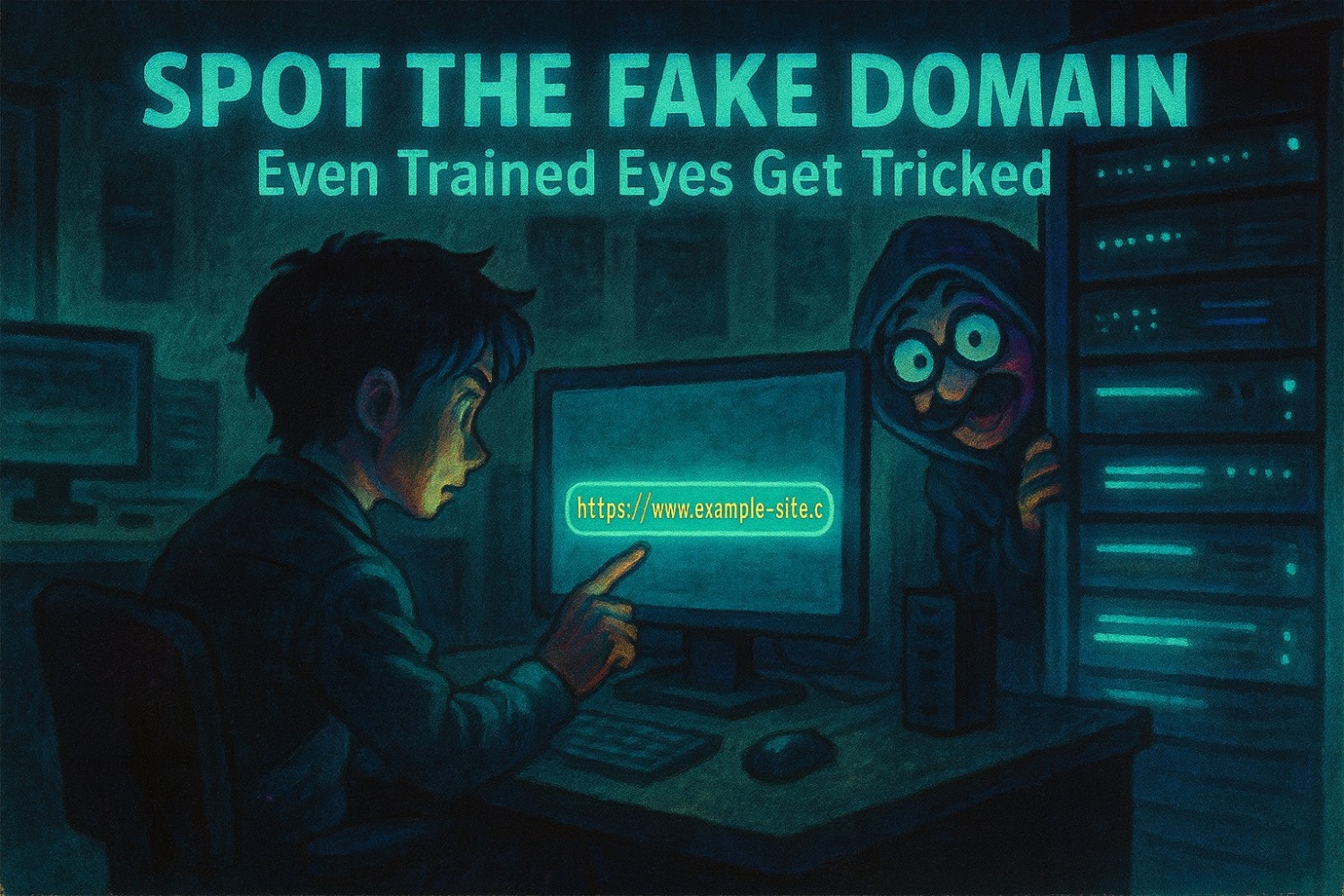
Spot the Fake Domain That Outsmarts Even the Trained Eye

Spot the Fake Domain Before it’s too late.One quick skim.One login screen.One domain that almost looked right. That’s all it takes for credentials to be handed over without anyone realizing until it’s too late. Even experienced users fall for fake domains.Why? Because they’re designed to win at speed to blend in, feel familiar, and never trigger a second glance. Cybercriminals aren’t just sending spam anymore.They’re crafting nearly flawless copies of your trusted tools, brands, and URLs. And the smartest person in the room?They’re often the first to click. Spot the Fake Domain that Tricks Smart Users These aren’t obvious scams.They’re visual replicas built to trick muscle memory, not just judgment. Here’s how they get past your filters and your instincts: No malware. No red flags. Just one wrong domain in a sea of legit ones. Spot the Fake Domain that Even Smart Users Miss It It’s not carelessness. It’s design. People are wired to move quickly especially in digital spaces they trust.And when attackers lean on that trust, they don’t need to exploit a system…They just need a moment. That’s why even trained professionals fall for lookalike domains.Because training builds knowledge.But real protection requires instinct. Spot the Fake Domain to Build URL Awareness as a Habit Spotting fake domains isn’t about memorizing a checklist.It’s about creating a culture where people slow down just enough to catch what software can’t. Here’s how to start building that awareness: 1. Run Internal “URL Spot Checks” Drop two similar links into a team chat or training slide.One legit. One fake.Ask: Which one is safe? It’s fast. It’s visual. And it builds pattern recognition without pressure. 2. Highlight Real Phishing Domain Tricks Don’t train with overly fake examples.Use real red flags from recent campaigns: Let your team see what real attackers actually do. 3. Make Reporting Safe and Simple Sometimes someone spots a sketchy link but hesitates to report it.Fix that. Make “I think this looks weird” a welcome phrase not a moment of embarrassment.A shared Slack channel. A pinned email. A visual checklist.Whatever makes reporting fast and judgement-free. Cybersecurity That Starts Before the Click The best phishing emails don’t scream “I’m a scam.”They whisper, “You’ve seen me before.” And unless your people are trained to stop and lookThe message gets through. So does the damage. But if they pause long enough to catch the subtle switch?That one second becomes your strongest defense. Final Takeaway Technology stops a lot.But fake domains are built to outsmart habits not just firewalls. If you want your team to really spot what matters,you need more than policies.You need training that teaches people to see what tools don’t. Want to help your team build that instinct?Let’s talk. We’ll walk you through simple ways to reduce risk without adding more noise.[Book a time that works for you]

Spot the Fake Domain That Outsmarts Even the Trained Eye Read More »

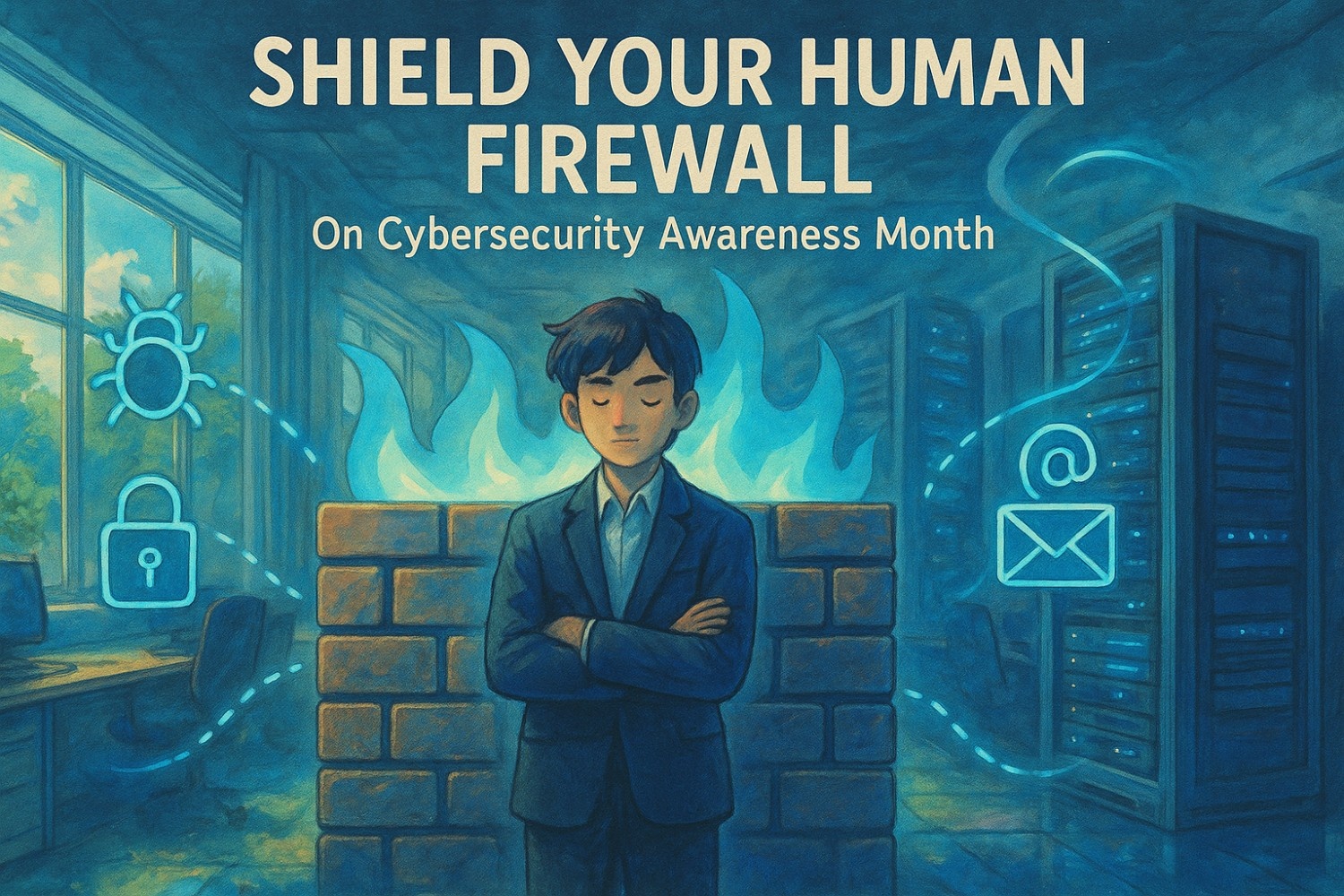
Illustration of employees standing in front of a digital firewall, symbolizing a strong human firewall during Cybersecurity Awareness Month, with a focus on team awareness, phishing prevention, and workplace cybersecurity culture.

Cybersecurity Awareness Month Human Firewall

Cybersecurity Awareness Month Human Firewall. Even the best security tools can’t stop a well-crafted phishing email if someone clicks. And that’s exactly what attackers count on human error.One typo.One fake invoice.One fast click. That’s all it takes for ransomware to spread, data to leak, or your operations to grind to a halt. Even the best security tools can’t stop a well-crafted phishing email if someone clicks. And that’s exactly what attackers count on human error. Cybersecurity Awareness Month Human Firewall: Your People Are the Front Line You’ve enforced multi-factor authentication. Your devices auto-update. The firewall is solid. But what about the human side of your defense? Cybersecurity is no longer just a tech issue it’s a people issue. Cybersecurity Awareness Month Human Firewall: Build Cyber Habits, Not Just Awareness This Cybersecurity Awareness Month, go beyond check-the-box training. Build a culture where every team member becomes a line of defense. Here’s how to reinforce your human firewall one habit at a time: 1. Teach Real-World Threat Spotting Show actual phishing emails (with red flags highlighted).Use your chat app or intranet to run “Spot the phish” challenges.Turn passive learning into active recognition. 2. Normalize “Pause and Verify” Fast clicks lead to big breaches. Slow things down.Make thoughtful, double-check behavior the team standard.Celebrate moments when people don’t click and verify first. 3. Eliminate Shame in Reporting Encourage all reports even if they turn out to be nothing.Track and share your team’s “phishing stopped” stats.Make cyber wins part of team wins not just IT’s problem. This Week’s 20-Minute Fixes You don’t need a long training module to make progress today. Start small: Cyber Starts with Culture You can’t patch people. But you can build better instincts. When your team knows how to spot a scam, report a suspicious email, and stay alert, they become your strongest defense. Because in 2025, the biggest risk isn’t outdated software it’s a distracted click. And your best cybersecurity investment? A team that knows better.You’ve got the tools now it’s time to align your team. Let’s build the culture behind your firewall.Book a Quick Call and we’ll show you how.

Cybersecurity Awareness Month Human Firewall Read More »

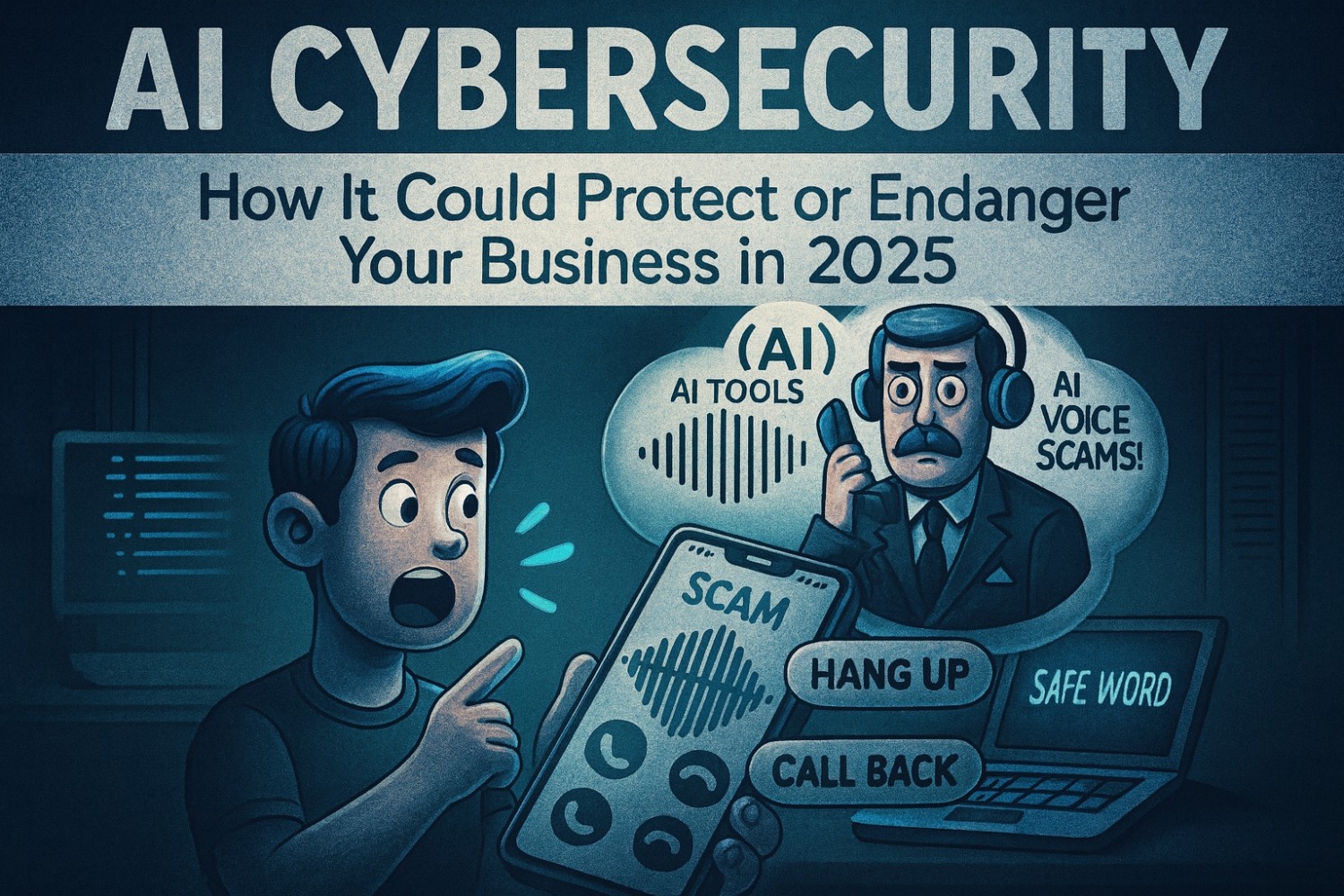
AI cybersecurity scene, hand-drawn vintage IT office: worker points to phone marked “SCAM”; bubble shows AI voice scammer; laptop says “SAFE WORD”

AI Cybersecurity in 2025: Smart Shield or Silent Sabotage?

AI Cybersecurity: It all starts with a call,It’s Monday morning. You’re sipping your coffee, ready to take on the week. Then a voice message from your “CEO” arrives urgent, precise, impossible to ignore. The voice is identical, down to their tone and quirks. But it’s not them. It’s an AI-generated clone, designed to trick you into transferring money. One wrong click, and your business accounts could be drained in minutes. This is the new reality of AI in 2025. Artificial intelligence has changed the rules. Both defenders and hackers now use the same technology. The winner? The one that’s prepared. How AI Cybersecurity Protects Businesses When used for good, AI Cybersecurity acts like a 24/7 digital bodyguard. Centrend example: Our team has seen AI-powered monitoring stop phishing emails in under a minute, before they even reached an inbox. When AI Cybersecurity Fails AI isn’t flawless and without human oversight, mistakes can be costly. Hackers target blind spots that AI can’t detect. When Hackers Use AI Cybersecurity Against You Cybercriminals are using AI to attack faster and smarter: Real-world impact: Even seasoned executives have been fooled by AI-driven phishing scams that looked completely authentic. How to Stay Ahead in 2025 Winning in cybersecurity now means pairing AI with human intelligence: Partner with experts – Work with Centrend, a cybersecurity provider who understands both the power and risks of AI. The Bottom Line AI Cybersecurity is no longer optional. It’s here. It’s evolving. It can be the shield that protects your business, or the sword that cuts it down. The question isn’t if AI will impact your business.It’s whether it will protect you… or attack you. 📞 Contact Centrend today to schedule your AI-Powered Cybersecurity Assessment and make sure AI is working FOR YOU, not AGAINST YOU.

AI Cybersecurity in 2025: Smart Shield or Silent Sabotage? Read More »

Scroll to Top