
Centrend

business technology planning

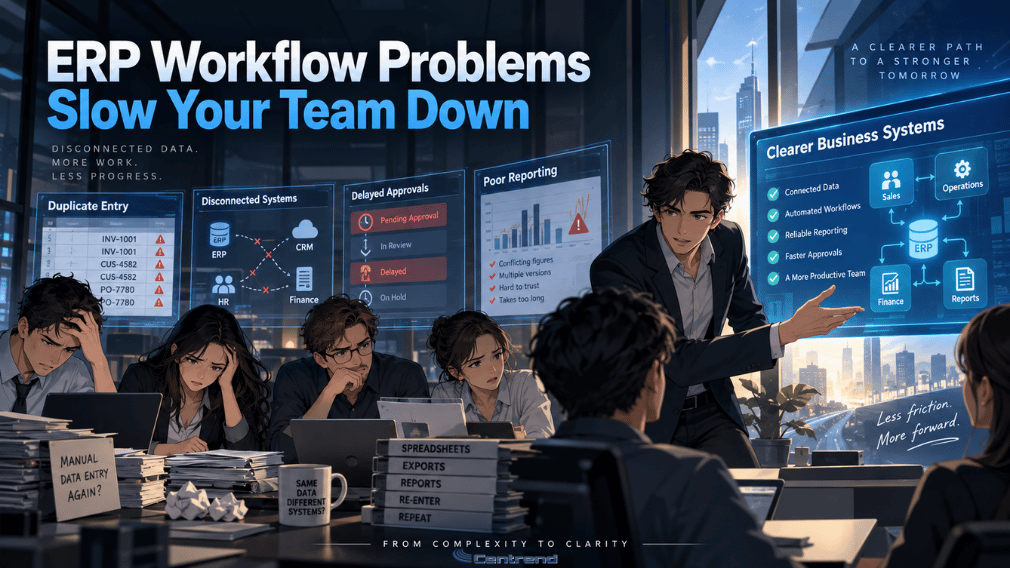
ERP Workflow Problems Slow Your Team Down

ERP Workflow Problems can quietly create more work for your team instead of reducing it. That is a serious issue. Your ERP should help people work faster, make better decisions, and trust the information in front of them. But when the system is disconnected, poorly structured, or difficult to use, it can do the opposite. It can slow the business down. The problem Many businesses invest in ERP software expecting cleaner workflows and better reporting. But the software alone does not fix the process. If teams still enter the same information in multiple places, chase missing details, rely on spreadsheets, or wait too long for reports, the ERP is not reducing work. It is creating more of it. That usually leads to: The issue is not always the ERP itself. Sometimes the bigger issue is how the system is set up, connected, used, and supported. Why this matters An ERP touches important parts of the business. Orders.Inventory.Accounting.Purchasing.Reporting.Operations.Customer information. When the workflow is unclear, the impact spreads quickly. A small data issue can affect reporting. A missing step can delay an order. A disconnected process can create extra work for multiple teams. A report that takes too long to prepare can slow down leadership decisions. That is why ERP problems should not be treated as small system annoyances. They are business workflow problems. The real cost of disconnected ERP workflows Disconnected ERP workflows do not always look like major failures. They often show up as daily friction. A team member enters the same information twice. Someone exports data into a spreadsheet because the report is not easy to use. A manager waits for another department to confirm details manually. A customer update gets delayed because the information is not in one clear place. Each issue may seem small. Together, they cost time, focus, and confidence. Your ERP should make work easier to manage. It should not force your team to build workarounds just to get through the day. Better ERP starts with the process Before adding another tool, report, or workaround, the process needs to be clear. Ask simple questions: These questions help reveal whether the issue is the software, the workflow, the data, the training, or the connection between systems. That clarity matters. Because better ERP results usually start before the technical fix. What a better ERP workflow should do A strong ERP workflow should help the business move with less confusion. It should help teams: The goal is not to make the ERP more complicated. The goal is to make the business process cleaner. How Centrend helps Centrend helps businesses look beyond the software and focus on the workflow behind it. That means reviewing how the ERP supports daily operations, where teams are losing time, where reporting gaps exist, and where better structure or integration can reduce friction. The focus is practical. Cleaner processes.Clearer reporting.Better system alignment.Less duplicated work.Stronger business visibility. Centrend helps guide businesses toward ERP improvements that make the system easier to use and more valuable to the people who rely on it every day. TL;DR Make ERP work better for your business Your ERP should support your team, not slow it down. If your business is dealing with duplicate entry, disconnected workflows, poor reporting, or too many manual workarounds, it may be time to review the process behind the system. Talk to Centrend about building cleaner ERP workflows and stronger business systems.

ERP Workflow Problems Slow Your Team Down Read More »
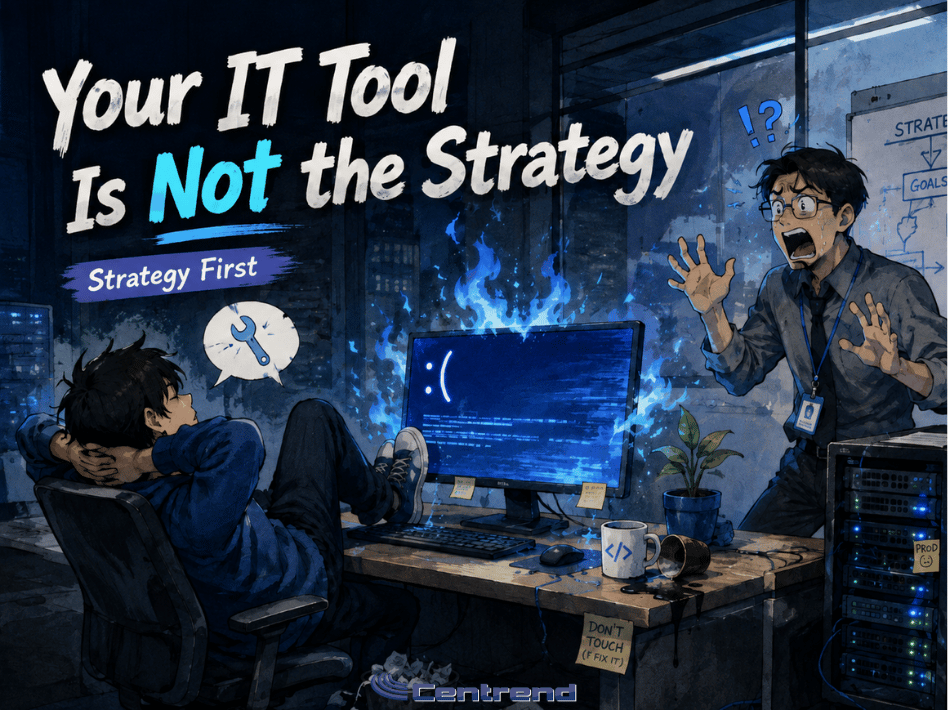
Your IT Tool Is Not the Strategy

Buying a new IT tool can feel like progress. But a tool without a clear strategy can quickly become another thing your team has to manage. Adding software does not guarantee better operations.Dashboards do not automatically create better visibility.Automation only works when the process behind it is clear. The real strategy starts before the tool. It starts with the business goal. The problem Many businesses buy technology to solve a problem they have not fully defined. A team needs better communication, so they buy another app. A process feels slow, so they add automation. A security concern appears, so they add another platform. A department wants better reporting, so they create another dashboard. Each tool may be useful on its own. But without a clear plan, the business can end up with: That is not a strategy. That is tool stacking. Why this matters Technology should support the business. It should not create more work for the people using it. When tools are added without strategy, teams may not know who owns them, how they connect, what problem they solve, or how success will be measured. That creates frustration. Leadership may think the issue was solved because a tool was purchased. The team may still be dealing with the same problem, just inside a new system. The better question is not, “What tool should we buy?” The better question is, “What outcome are we trying to improve?” Strategy comes first A strong technology decision starts with clarity. Before choosing a tool, your business should understand: Without those answers, the business may buy something that looks helpful but does not fix the real issue. The role of advisory services This is where advisory support matters. Advisory services help businesses slow down long enough to make better technology decisions. The goal is not to block progress. The goal is to make sure progress is pointed in the right direction. A good advisory process helps leadership review the business need, compare options, identify risks, and build a practical roadmap before investing more time or money into another platform. That kind of guidance can prevent wasted effort. It can also help teams choose tools that fit the business instead of forcing the business to work around the tool. What better planning looks like Better technology planning does not have to be complicated. It starts with a clear review of what is happening now. How are teams losing time? Which systems disconnected? Who owns each process What risk increasing? Why are employees creating workarounds? Once those answers are clear, the next step is easier. The business can decide whether it needs a new tool, a better process, stronger training, improved documentation, tighter security, or a cleaner integration between systems already in place. Sometimes the answer is new software. Sometimes the answer is fixing the process first. The cost of skipping strategy When businesses skip strategy, they often pay for it later. Not always in one big failure. Usually in small, repeated problems. A tool does not get used. A system is not configured correctly. Two departments use different processes. No one knows who owns updates. Reports do not match. Security settings are missed. The team loses trust in the tool. The company spends money but does not get the value it expected. That is why strategy matters. It protects the investment. The better approach Start with the goal. Then build the roadmap. Then choose the tool. A better technology decision should connect business needs, daily workflows, security, support, ownership, and long-term planning. That is how technology becomes more useful. Not just newer. Not just louder. More aligned. And accountable. More valuable. How Centrend helps Centrend helps businesses make smarter technology decisions by connecting strategy, planning, support, and execution. Instead of starting with a tool, Centrend helps clarify the business problem, review the current environment, identify the right next step, and build a practical roadmap that supports the way the business actually works. That means fewer disconnected decisions. Fewer surprises. Clearer ownership. Better long-term value from technology. TL;DR Choose strategy before the tool Your business does not need more technology for the sake of having more technology. It needs the right technology, chosen for the right reason, supported by the right plan. Looking for clearer guidance before your next IT decision? Talk to Centrend about advisory services and build a technology roadmap that supports your business goals.

Your IT Tool Is Not the Strategy Read More »

Scroll to Top