Centrend

Managed Services

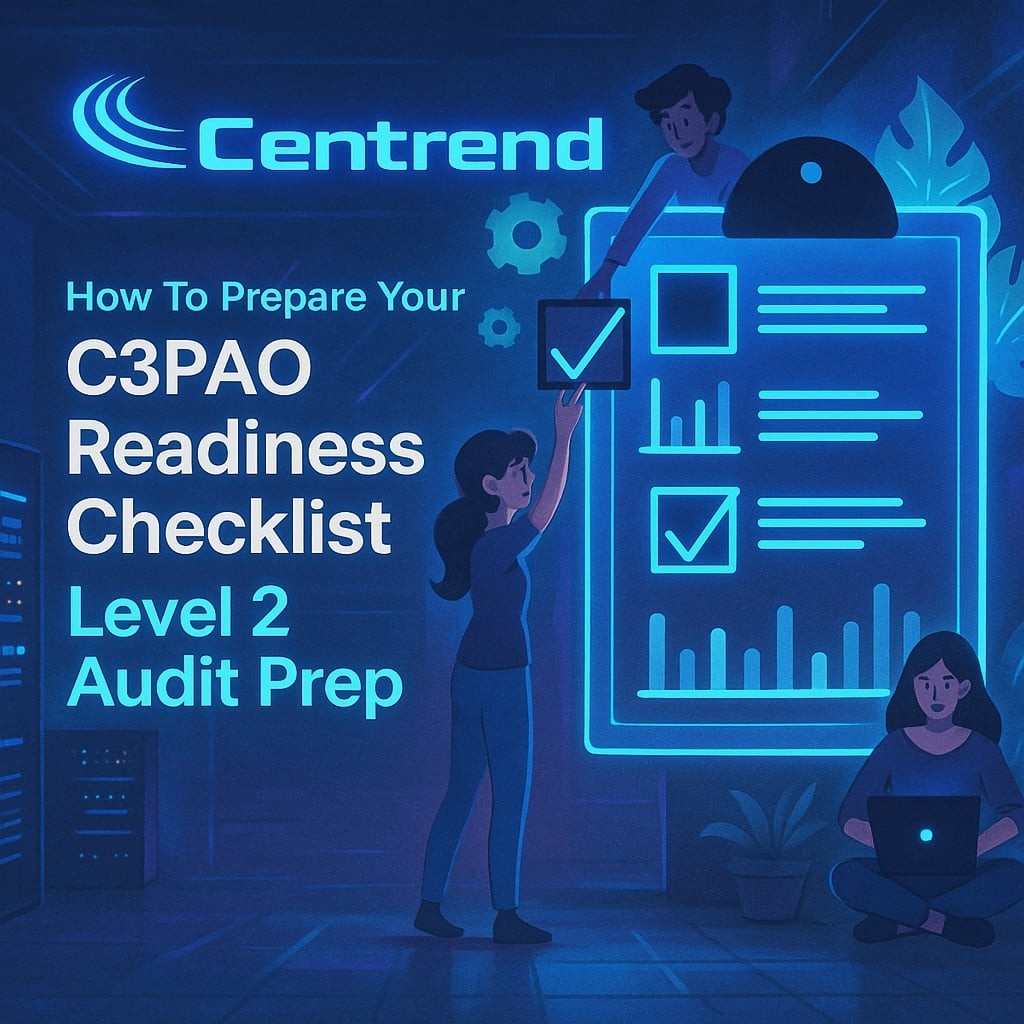
Centrend graphic titled “C3PAO Readiness Checklist: Level 2 Audit Prep” showing a team marking a checklist in a server room.

C3PAO Readiness Checklist: Level 2 Audit Prep

C3PAO Readiness Checklist, award checks are active. A posted score in SPRS helps, but certification is what carries you through evaluation and option years. This guide shows how leaders turn policies into proof that holds up with a C3PAO for CMMC Level 2.  Why This Matters Now What Assessors Look For First POA&M discipline, open items prioritized and tracked to closure within allowed windows. The C3PAO readiness checklist (run this before you book) Scope and boundaryMap CUI data flows, users, apps, devices, vendors.Produce a simple boundary diagram and asset and user inventories. Controls and proofMFA: screenshots or exports showing enforcement for all in-scope accounts.Logging: samples that show useful events retained.Access reviews: add or remove records with approvals.Backups: test logs.IR tabletop: agenda, notes, and follow-ups. DocumentsSSP that reflects the real boundary.Policies and procedures referenced by the SSP.Change control tickets with testing and approvals. SPRS touchpointsPost the self-assessment correctly.Keep the affirmation current.Ensure CMMC UIDs align to the assessed systems. Subcontractors Verify each sub’s level and SPRS status before proposal time; keep a lightweight record. A Simple 30-60-90 Plan 1. Days 0-30 2. Days 31-60 3. Days 61-90 Confirm sub flow-down status; if required, reserve your C3PAO window.  Mock-Audit Script (use in a 60-minute rehearsal) Close: Open POA&M items, owners, and due dates, then next milestones toward certification.  Common Blockers That Slow Certifications What “good” Looks Like On Evidence Where Centrend Fits Get C3PAO-ready: with a short readiness call [Download the Level 2 Evidence Checklist]

C3PAO Readiness Checklist: Level 2 Audit Prep Read More »

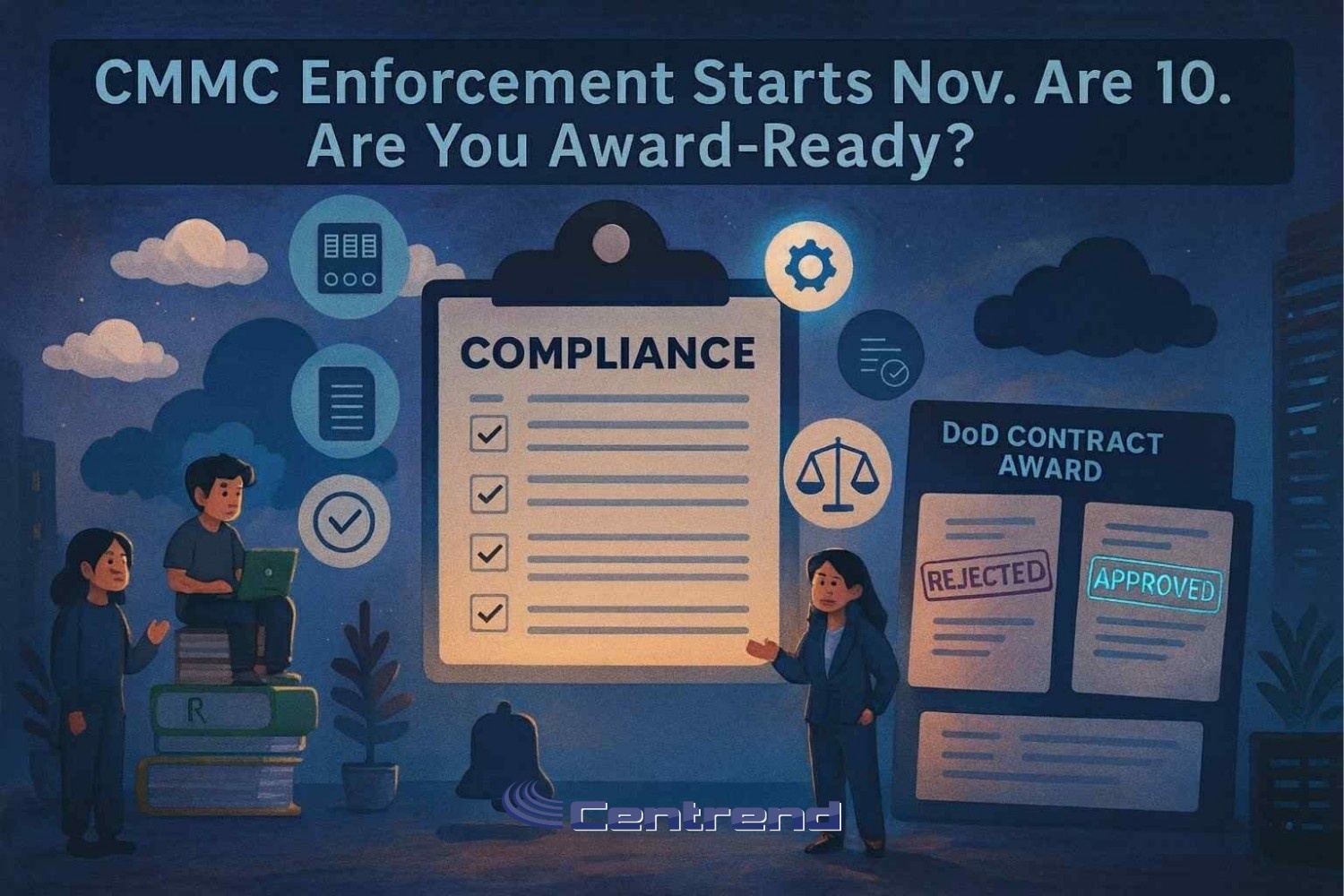
CMMC Enforcement Nov 10 blog hero showing a compliance checklist and DoD contract award board with approved stamp

CMMC Enforcement Nov 10: Are You Award-Ready?

CMMC Enforcement Nov 10, the Department of Defense (DoD) can enforce CMMC at the time of award or extension. If your self-assessment is missing or your SPRS status is wrong you risk getting ruled out before you’re even considered. And the rule is final. The clock is ticking. And if you’re not tracking what’s changing, your pipeline could dry up faster than you think. Why This Matters Now Your eligibility isn’t just about pricing or past performance anymore. Contracting officers will now check your SPRS entry before award. And if you’re not showing a valid Level 1 or 2 self-assessment?You may never make it past evaluation. What’s Changing with CMMC – Final Rule Effective Nov 10– CMMC UID assigned in SPRS to each system that handles FCI or CUI– Applies to both primes and subs– COTS-only contracts are exempt Even for smaller awards or renewals, SPRS visibility matters now. The Phased Timeline (What’s Required and When) Phase 1 Starts Nov 10, 2025:Level 1 and many Level 2 self-assessments must be posted in SPRS. Some Level 2 contracts may already require C3PAO certification. Phase 2 Nov 10, 2026:Third-party Level 2 assessments show up in more solicitations. Phase 3 Nov 10, 2027:Level 2 C3PAO certification becomes the norm across most relevant awards. Level 3 begins appearing for high-priority programs. Phase 4 Nov 10, 2028:Full rollout. Every DoD award involving FCI/CUI enforces CMMC compliance. Why Waiting Is a Risk SPRS entries must be accurate now.Self-assessments take time especially for Level 2.C3PAO assessment slots are limited.Delays = missed awards. How to Get Started Now Flow compliance downstream to subs. Where Centrend Comes In We don’t just consult we help GovCons get award-ready and stay that way: Scoping & Segmentation – Clarify where FCI/CUI lives, reduce risk exposureLevel Identification – Map contract needs to the correct CMMC levelSPRS Self-Assessment Support – We guide the process and ensure accurate postingLevel 2 Readiness – Gap lists, POA&Ms, SSPs, audit rehearsalOperational Maintenance – Reviews, sub-tier checklists, patching protocols Final Takeaway This rule is already in motion and if you’re not in the SPRS system or your assessment is out of date you’re at risk of losing contracts you’re qualified to win. Let Centrend help you go from unsure to award-ready, fast. [Book Your FREE CMMC Readiness Call]

CMMC Enforcement Nov 10: Are You Award-Ready? Read More »

Illustration of a masked hacker stealing credit card data through a QR code scam, with a “Scan Me” sign and smartphone in a dark office setting

QR Code Phishing Defense: Read Before You Scan

QR Code Phishing Defense.One sticker. One poster. One scan.That’s all it takes for a credential theft or payment fraud. QR phishing is on the rise and it’s not by accident.Attackers are shifting away from email to target your phone, where security filters fall short and domain previews are harder to verify. In 2025, we’ve seen a sharp uptick in QR-based scams like fake parking meter stickers and “track your package” codes that lead to spoofed login pages. They’re fast, convincing, and built to sidestep everything your email gateway protects. One scan is all it takes. QR Code Phishing: Build Habits, Not Just Warnings Turn everyday scans into second-nature security. What to do in the moment: Pause → PreviewBefore scanning, check if your phone can preview the destination. If the code’s already scanned, long-press the link and inspect it. Look closely at the domain: misspelled brands, extra characters, or odd endings like .co instead of .com are major red flags. Verify → Use Official Apps When it comes to payments parking, utilities, deliveries don’t trust a sticker or flyer. Use the official app or a saved bookmark instead of following an unfamiliar QR code. Report → Share FastIf it feels off, report it. Right away.Your early warning can help stop a scam before it spreads. Make it easy to say, “This looks weird” no judgment, just shared vigilance. QR Phishing Defense, What to set up this week “Scan-or-Skip?” DrillGrab three QR examples one real, two risky. Ask your team: which one would you trust? Why? Build pattern recognition through discussion, not fear. Parking & Package PSAPin a quick reminder: “Don’t scan QR codes on meters or surprise deliveries. Use the app.” Simple, visual, easy to remember. Passwordless PushWhere you can, shift critical logins to phishing-resistant authentication (FIDO/WebAuthn). That one move can blunt the impact of a bad scan. What’s Happening Out There Malicious QR Codes Are EverywhereIn Q2 2025 alone, over 635,000 unique malicious QR codes were detected and 1.7 million+ in the six months prior. Scams in the WildQR stickers placed on parking meters and signage have scammed drivers and harvested payments. Consumer alerts are ongoing. FBI Warnings ContinueLaw enforcement has flagged suspicious QR codes on unsolicited packages—designed to steal login credentials or push malware. Final Takeaway You can’t filter a scan.But you can build habits that pause, preview, verify and report. That one extra second?It could be your strongest layer of defense. Want a ready-to-use “QR Spot Check” drill for your team?Let’s connect we’ll walk you through a short rollout plan tailored to your workflows. No pressure, just prevention. [Book Your FREE QR Spot Check Drill Today]

QR Code Phishing Defense: Read Before You Scan Read More »

From Reactive To Proactive: Why Your IT Strategy Needs An Upgrade

As you work through Q1 of 2025, one thing is abundantly clear: businesses that thrive are those that stay ahead of the quickly evolving technology world. Reactive IT strategies – waiting for problems to occur before addressing them – are no longer sufficient in a world where downtime, breaches and inefficiencies can cost thousands of dollars in a matter of minutes. (Yes, you read that correctly. Minutes!) It’s time to shift from reactive to proactive IT management. Here’s why upgrading your strategy is crucial this year and how a proactive approach can save your business time, money and stress. Why Reactive IT Is Holding You Back 1. Downtime Costs Too Much A single hour of downtime can cost small businesses $10,000 or more, according to industry estimates. Reactive IT management waits for something to break before fixing it, meaning that the clock is ticking – and your revenue is slipping – while issues are resolved. Without a plan, this can take much longer than expected. 2. Security Threats Evolve Faster Than You Can Respond Cybercriminals are leveraging advanced tools like AI to automate attacks, making them faster and harder to stop. A reactive approach means you’re always playing catch-up, leaving your business vulnerable to ransomware, phishing and other cyberthreats. 3. Productivity Suffers When employees constantly battle slow systems, recurring tech issues or outdated hardware, their productivity plummets. These interruptions frustrate your team and can even lead to employee burnout. The Case For Proactive IT Management A proactive IT strategy flips the script. Instead of waiting for problems to arise, proactive management anticipates issues, prevents downtime and optimizes your systems for performance. 1. Early Detection Saves Time And Money Proactive monitoring tools can identify potential issues – like failing hardware, security vulnerabilities or inefficient processes – before they impact your business. By addressing problems early, you minimize costly downtime and disruptions. 2. Enhanced Cybersecurity Proactive IT providers implement advanced security measures, such as: This layered approach keeps your data and systems safe from evolving threats. 3. Improved Productivity And Efficiency When your systems run smoothly, your team can focus on what they do best. Proactive IT management ensures that your hardware, software and network are optimized for maximum performance so your employees spend less time troubleshooting and more time delivering results. What Does Proactive IT Look Like? A proactive IT provider will: They don’t just fix problems – they prevent them. Is Your IT Strategy Ready For 2025? If you’re still relying on a reactive IT approach, you’re leaving your business open to unnecessary risks and inefficiencies. Upgrading to a proactive IT strategy is not just a smart move – it’s a necessary one in today’s fast-paced digital world. Ready to make the shift? Schedule a FREE Network Assessment today. Our experts will evaluate your current IT setup, identify vulnerabilities and provide a customized plan to ensure your business is ready for whatever 2025 throws your way. Click here to book your FREE Network Assessment now! Don’t wait for the next tech disaster – get ahead of the game with proactive IT management.

From Reactive To Proactive: Why Your IT Strategy Needs An Upgrade Read More »

Should You Upgrade Or Replace Your Devices? A Guide For Windows 10 Users

Windows 10’s end-of-life is looming, and with support officially ending in October 2025, it’s decision time for businesses and individuals still relying on the operating system. The big question? Should you upgrade your existing devices to Windows 11 or is it time to replace them altogether? Here’s a guide to help you make the right choice based on your needs, budget and goals. Step 1: Check Compatibility Before deciding, determine if your current hardware meets Windows 11’s requirements. Microsoft has set strict system requirements to ensure the new operating system runs smoothly and securely. Key requirements include: How To Check: Outcome:If your system fails the compatibility test, you’ll need to upgrade your hardware or consider a replacement. Step 2: Evaluate The Age Of Your Devices How old is your current hardware? Devices older than 5 years are often slower and less efficient and may not support Windows 11’s requirements. Reasons To Replace Older Devices: Step 3: Assess Your Performance Needs Does your current hardware meet your day-to-day needs? Consider: When To Upgrade:If your devices are still performing well, upgrading to Windows 11 may be the most cost-effective solution. When To Replace:If performance issues are impacting productivity, replacing your hardware can save you money in the long run by avoiding downtime and inefficiencies. Step 4: Weigh The Costs Budget is always a factor when deciding whether to upgrade or replace. Upgrading Existing Devices: Replacing Devices: Step 5: Consider Future-Proofing Newer devices come equipped with the latest technology, offering: Investing in replacement devices now can position your business for growth and innovation, ensuring your systems remain efficient for years to come. Pro Tip: Involve An IT Professional Still unsure? Partnering with an IT provider can simplify the decision-making process. They can: Take The Next Step Deciding whether to upgrade or replace your devices doesn’t have to be overwhelming. Start with a FREE Network Assessment to evaluate your systems and get personalized recommendations for a smooth transition to Windows 11. Click here to schedule your FREE assessment today! Don’t wait until the October 2025 deadline – get ahead of the game and ensure your business is ready for what’s next.

Should You Upgrade Or Replace Your Devices? A Guide For Windows 10 Users Read More »

New Year, New Tech: Top IT Upgrades To Supercharge Your Business In 2025

January isn’t just for fresh starts and ambitious resolutions – it’s the perfect time to evaluate your business’s technology needs. As we step into 2025, staying competitive means leveraging IT solutions that boost efficiency, improve security and prepare you for the demands of a rapidly changing, AI-focused digital world. The cost of outdated or inefficient IT systems is steep: According to a report by ITIC, the average cost of IT downtime for an SMB is $1,670 per minute per server! There are also other costs that we can’t measure in direct dollars, but the loss is still felt. This are the cost of constant disruptions to business through dropped calls, lagging Internet, improperly organized cloud systems, etc. With that in mind, here are the top IT upgrades that can set your business up for success this year. 1. Move To The Cloud – Enhance Flexibility And Reduce Costs Cloud solutions are no longer just about file storage; they’re the backbone of modern business operations. If you don’t use them, you are not only behind but working inefficiently. From improving collaboration for remote teams to ensuring business continuity in the event of an outage, moving to the cloud offers: Businesses using cloud technologies report a 20% average reduction in IT spending, according to Flexera. 2. Strengthen Your Cybersecurity Strategy With cyberthreats evolving daily, it’s critical to stay one step ahead. Cybercrime is expected to cost businesses $10.5 trillion annually by 2025, according to Cybersecurity Ventures. Protect your business with: Prioritizing cybersecurity is not just about protection – it’s about maintaining trust and avoiding costly downtime or reputational damage. 3. Upgrade Your Hardware Outdated devices can bottleneck productivity and expose your network to vulnerabilities. If your computers, servers or networking equipment are several years old, consider replacing them with more efficient and secure alternatives. What To Look For: 4. Leverage AI-Powered Tools For Operational Efficiency Artificial intelligence is no longer a luxury – it’s a necessity for businesses looking to streamline operations. AI tools can: And so much more! For example, AI-driven tools can help your IT team identify and resolve issues before they impact your business and even handle customer service questions or complaints. 5. Adopt Unified Communications Unified Communications as a Service (UCaaS) brings your e-mail phone, video conferencing and chat tools into one integrated platform. The result? Better collaboration, reduced miscommunication and significant time savings. Pro Tip: Look for UCaaS solutions with built-in security and integration capabilities to ensure seamless adoption across your team. Every business has unique needs, and IT upgrades are not a one-size-fits-all solution. While these suggestions provide a starting point, the best results come from building an optimized system tailored to your specific goals and challenges. That’s where a FREE Network Assessment can make all the difference. By evaluating your current infrastructure, identifying inefficiencies and prioritizing your investments, you can make informed decisions that maximize your IT budget and create a system designed for efficiency and growth. Ready to future-proof your business to scale up in 2025? Call us at 774-241-8600 or click here to schedule your FREE Network Assessment today and take the first step toward a smarter, more secure IT environment.

New Year, New Tech: Top IT Upgrades To Supercharge Your Business In 2025 Read More »

The End Is Almost Here! Windows 10 Will No Longer Be Supported As Of October 2025

Important News: Microsoft will NO LONGER support Windows 10 after October 2025! While these PCs will still work after the official end date of October 14, 2025, Microsoft will no longer provide product key free services that keep your device working properly and securely. These services include: Why Is This Important For Business Owners? What Are Your Options? Microsoft encourages users to migrate to the latest version before the end-of-life date. This can present challenges for some PC owners, as not all devices currently running Windows 10 are compatible with Windows 11. If you try to upgrade one of those PCs to Windows 11, but the device does not meet the stringent hardware requirements of the new software, you’ll encounter an error message. If your device isn’t compatible with Windows 11, you have a few options. You can: Whatever you decide, make sure to back up your data! Before making any changes, always back up your important files. This ensures that nothing gets lost during the upgrade process. Planning Ahead It’s important to be proactive about the transition. There has been some discussion that Microsoft will extend the deadline, but that’s not a strategy you want to bet your business on. You don’t want to wait to take action until you’re out of options and your business is at risk because you no longer have security protection. The best step is to work with your IT provider to determine what option makes sense for your organization. If your computers are fairly new, paying for ongoing security updates might make sense. If your devices are older and nearing the end of their life anyway, new PCs could be the way to go. An experienced IT team or a tech consultant can help you with the upgrade process. They can make sure everything runs smoothly and minimize any downtime for your business. If you’re looking for someone to guide you in making the right decision, get in touch with our team to schedule a FREE 10-Minute Discovery Call. During this quick conversation, we’ll be able to map out the next steps to take to start transitioning to Windows 11 efficiently. To schedule, call us at 774-241-8600 or click here.

The End Is Almost Here! Windows 10 Will No Longer Be Supported As Of October 2025 Read More »

The End Is Almost Here! Windows 10 Will No Longer Be Supported As Of October 2025

Important News: Microsoft will NO LONGER support Windows 10 after October 2025! While these PCs will still work after the official end date of October 14, 2025, Microsoft will no longer provide product key free services that keep your device working properly and securely. These services include: Why Is This Important For Business Owners? What Are Your Options? Microsoft encourages users to migrate to the latest version before the end-of-life date. This can present challenges for some PC owners, as not all devices currently running Windows 10 are compatible with Windows 11. If you try to upgrade one of those PCs to Windows 11, but the device does not meet the stringent hardware requirements of the new software, you’ll encounter an error message. If your device isn’t compatible with Windows 11, you have a few options. You can: Whatever you decide, make sure to back up your data! Before making any changes, always back up your important files. This ensures that nothing gets lost during the upgrade process. Planning Ahead It’s important to be proactive about the transition. There has been some discussion that Microsoft will extend the deadline, but that’s not a strategy you want to bet your business on. You don’t want to wait to take action until you’re out of options and your business is at risk because you no longer have security protection. The best step is to work with your IT provider to determine what option makes sense for your organization. If your computers are fairly new, paying for ongoing security updates might make sense. If your devices are older and nearing the end of their life anyway, new PCs could be the way to go. An experienced IT team or a tech consultant can help you with the upgrade process. They can make sure everything runs smoothly and minimize any downtime for your business. If you’re looking for someone to guide you in making the right decision, get in touch with our team to schedule a FREE 10-Minute Discovery Call. During this quick conversation, we’ll be able to map out the next steps to take to start transitioning to Windows 11 efficiently. To schedule, call us at 774-241-8600> or click here.

The End Is Almost Here! Windows 10 Will No Longer Be Supported As Of October 2025 Read More »

Outdated Technology Is Costing Your Organization Money

Is your organization currently bleeding money due to its reliance on outdated technology? The answer is likely yes. A recent survey by Deloitte revealed that a staggering 82% of companies failed to meet their cost-reduction targets last year, with an inefficient technology infrastructure being the primary culprit. The 2024 poll of nearly 300 business leaders on business margin improvement and technology transformation efforts revealed that challenges with their technology infrastructure are the biggest barrier to organizations seeking to improve margins by cutting costs. This same study found that over 50% of the respondents reported that leveraging data and generative AI strategies for improving margins would be their focus for 2024. What does this tell us? Organizations are looking to adopt new, automated, AI-powered ways of doing business to save money and improve efficiency but are held back by antiquated technology. Why Should Businesses Upgrade Their Technology? Legacy systems, typically categorized as technology that’s at least a decade old, can quickly become expensive to maintain. They are slower, need constant updates and patches, and don’t leverage new features as they’re developed. As a result, businesses struggle to keep up with their tech-savvy competitors in every area of the organization, from scaling and cloud usage to human resources and customer service operations. But that’s not the only issue. Outdated technology increases your risk of cyber-attacks. Old technology typically cannot keep up with the rapidly changing world of cyber security. As new, more malicious threats emerge, older technology eventually becomes incapable of keeping up with the latest updates required to keep your network secure. So, why do business owners put off updating technology when the data clearly shows that it will positively impact productivity and the bottom line? There are a couple of reasons, the main one being sticker shock. Seeing the price of updating technology infrastructure can feel overwhelming. Smart business leaders run through risk-related questions like “What if something breaks?” or “What if it doesn’t work like they say it will?” However, the data shows that maintaining old technology could be more costly. A separate Deloitte study of CIOs in 2023 found that respondents spent an average of 55% of their technology budget on maintaining their existing systems. There’s also the cost of switching. What will bringing systems down and transitioning to a new system cost? What will the cost be to train employees to use the software? These are all questions your IT team can help you answer BEFORE you start upgrading your technology. An experienced technician will help you analyze your system to see what needs to be updated and when, and map out a plan to upgrade your system in the most efficient way possible. It’s easier than most business leaders think and pays off in increased productivity and profitability. If you’re looking to upgrade your technology or are just tired of slow, outdated tech and want to see what the next step could look like, we’ll do a FREE Network Assessment. Our techs will dig into your system and determine what you need to get technology that helps you run your business better. To book your assessment, call us at 774-241-8600 or click here to schedule now.

Outdated Technology Is Costing Your Organization Money Read More »

Massive Layoffs In 2024 Create A Serious Threat To Your Cybersecurity

The massive wave of layoffs in 2024 brings a cybersecurity threat that most business owners aren’t focusing on – offboarding employees. Even big-time brands that you would expect to have top-of-the-line cybersecurity systems, processes and procedures in place fail to adequately protect themselves from insider threats. This August marks a year since two disgruntled Tesla employees went rogue after being let go and exposed the personal information – including names, addresses, phone numbers and even the Social Security numbers – of over 75,000 people, including employees. And, of course, the issue is expected to get worse. According to NerdWallet, as of May 24, 2024, 298 US-based tech companies have laid off 84,600 workers and counting. This includes major layoffs at big companies like Amazon, Google and Microsoft, as well as smaller tech start-ups. In total, around 257,254 jobs were eliminated in the first quarter of 2024 alone. Whether or not you’ll need to downsize your team this year, having a proper offboarding process in place is essential to every business, big or small, because it’s more than a routine administrative task – it’s a critical security precaution. Failing to revoke access for former employees can lead to serious business and legal implications later. Some of those issues include: A study by Osterman Research revealed that 69% of businesses experience data loss due to employee turnover, and 87% of employees who leave take data with them. Most often, the information you worked hard to gather is sold to competitors, used by them when they’re hired by the competition or used by the former employee to BECOME a competitor. Any way you cut it, it screws YOU. Do you have an airtight offboarding process to curb these risks? Chances are you don’t. A 2024 study by Wing revealed that one out of five organizations has indications that some of their former users were not properly offboarded, and those are the people who were astute enough to detect it. How DO you properly offboard an employee? These are only a few ways your IT team can help improve your offboarding process to make it more efficient and secure. Insider threats can be devastating, and if you think this can’t happen to you, think again. You have to be proactive in protecting your organization. To find out if any gaps in your offboarding process expose you to theft or a data breach, our team will do a free, in-depth risk assessment to help you resolve it. Call us at 774-241-8600 or click here to book now.

Massive Layoffs In 2024 Create A Serious Threat To Your Cybersecurity Read More »

Scroll to Top