Centrend

Cybersecurity

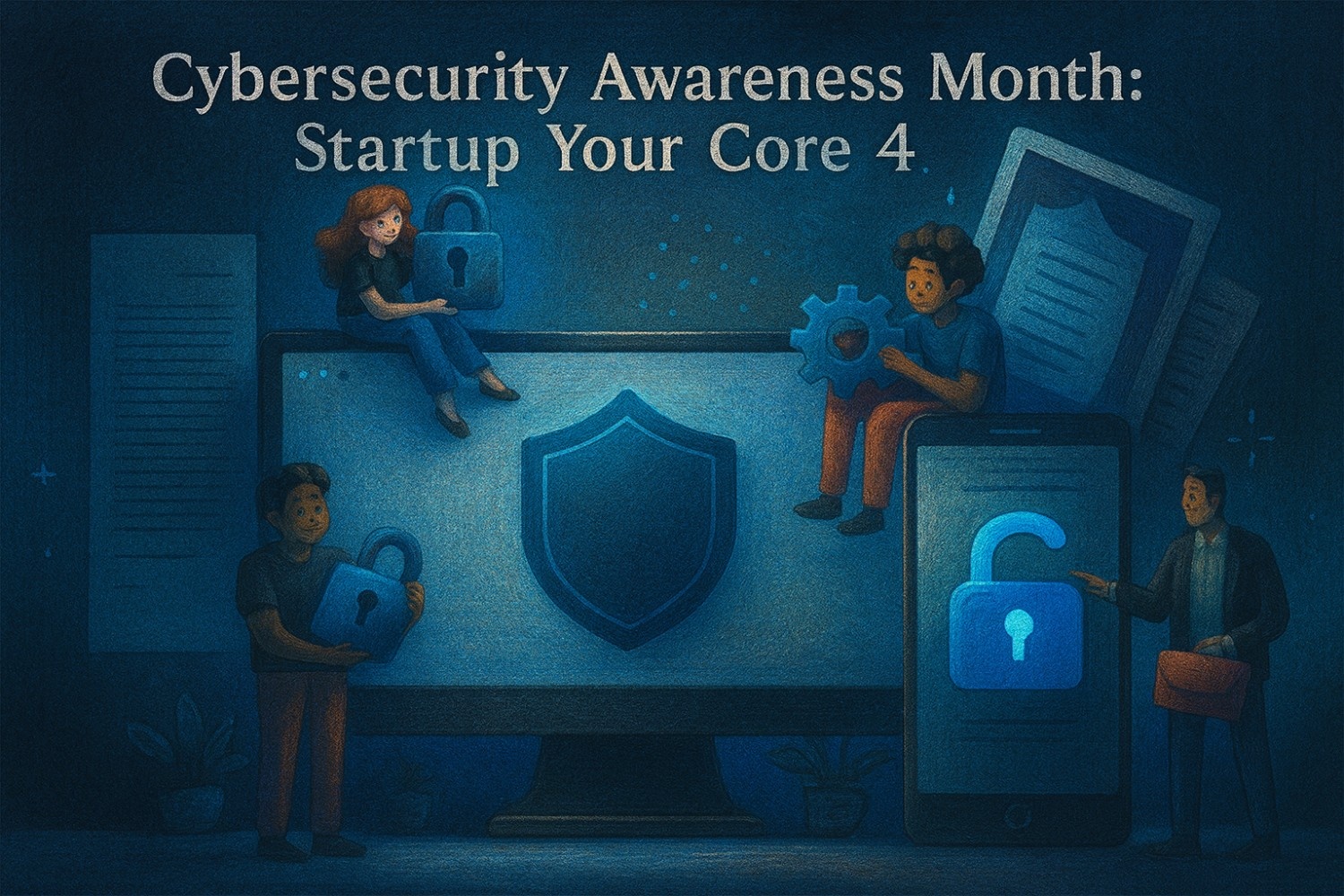
Digital illustration of a cybersecurity team inside a modern IT office, securing devices and data with locks and shields, promoting Cybersecurity Awareness Month: Startup Your Core 4.

Cybersecurity Awareness Month: Power Up Your Core 4

Cybersecurity Awareness Month is comingOne weak login can stop your day.A fast phish can drain time and trust.Power up your Core 4 today so your team keeps moving. 1) Turn on MFA where it matters most Start with email, Microsoft 365 or Google Workspace, payroll, banking, and VPN or remote access.Use an authenticator app when you can. Passkeys are even better when available.How to do it fast: open Security settings and enable two-step or MFA. Power Moves 2) Make passwords stronger and easier Use long passphrases. Make each one unique.Store them in a password manager so your team does not reuse logins.This is a Core 4 habit you can set up in minutes. Power Moves 3) Spot a phish in 60 seconds Slow down when something feels off.Check the sender. Hover links. Be careful with attachments.Report it to IT or your manager and use a known contact to verify.  Power Moves 4) Update your software Updates close known holes. Turn on automatic updates for your OS and browser.Run updates for key apps and security tools today. Power Moves Do this today in 20 minutes Why now Cybersecurity Awareness Month starts in October. It highlights these Core 4 steps for everyone, from families to small teams. Doing them early sets a strong tone for the month. Need a hand? Centrend can map your top five accounts, set MFA, clean up passwords, and share a one page phish check. 📞Book your Cybersecurity Awareness Month Power Up. We’ll start up your Core 4! in one simple session.

Cybersecurity Awareness Month: Power Up Your Core 4 Read More »
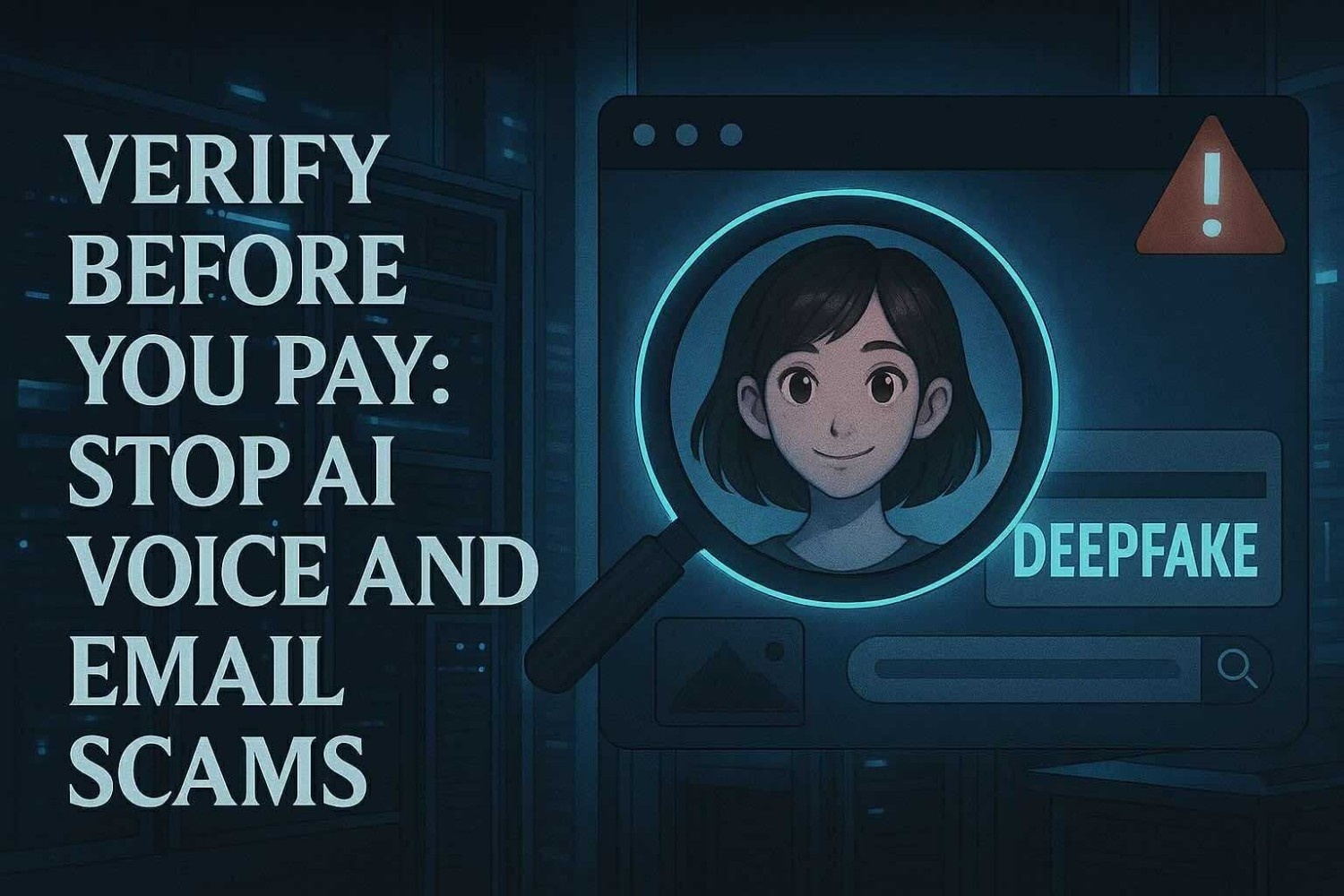
Accounts payable clerk confirms invoice by callback to stop AI voice email scams.

AI Voice Email Scams: Verify Before You Pay

Verify Before You Pay: Stop AI Voice and Email Scams.“It sounds like your boss.““It looks like your vendor.”“But it’s not.“ With AI, scammers can now clone voices, mimic writing styles, and craft emails that feel urgent, real, and impossible to ignore. One wrong click or a rushed “yes” can drain thousands from your account. The fix? Pause. Confirm. Then Pay. The Scam Setup: It’s More Convincing Than Ever The FTC warns: voice-cloning makes fake requests feel real.FBI reports: AI-generated voice and email scams are growing.IC3 data: Business Email Compromise (BEC) losses exceed $2.9 billion annually. The One-Page Playbook: Verify AI Voice Email Scams Use this for every invoice, every bank update, and every urgent request. ➤ First, call back using a known number Do not trust numbers in the message. Use the contact saved in your system or CRM.Even if it sounds like your CFO, confirm on their known number. ➤ Next, require two-person approval For risky payments or any banking changes, get two written approvals.Keep the record in one shared folder or an approval tool. ➤ Then, place first-time or changed accounts on a 24-hour hold If the account is new or modified, pause for one day. Use that time to verify by callback.Most scams rely on urgency, your delay blocks them. ➤ Meanwhile, use a code phrase for urgent asks Create a short, private phrase your team knows.If a caller cannot repeat it, stop. ➤ Also, log everything where all can see Use Teams Approvals in Microsoft 365 to record actions, names, and timestamps.Clear trails keep your team aligned and ready for audits. ➤ Finally, report every attempt If something felt off, document it.If money moved, call your bank at once and report at IC3.gov. Callback Script (read this word-for-word) Hi [Name], I’m calling on our known number because urgent payment requests can be faked, to avoid a costly mistake, please confirm the invoice number and amount, then the last four digits of the bank account on file, and finally who requested the change and when we’ll proceed only after this confirmation. Extra Guardrails that actually work 1) Start with stronger sign-ins.Move to phishing-resistant MFA and passkeys in Microsoft Entra ID. These methods block many login-theft tactics and cut off scams at the source. 2) Then watch for session-stealing kits.Some tools can grab cookies and bypass basic MFA. Upgrading to phishing-resistant methods and tightening endpoint controls reduces this risk. Train your team in 10 minutes First, run a quick role-play.Assign a “fake CFO” and a finance clerk who follows the callback script without bending the rules. Next, post a simple reminder.Place signs near desks and in Teams: No Callback, No Payment. Finally, repeat monthly.Short refreshers keep the habit strong. If you think you slipped Immediately call your bank to freeze or recall the transfer. Next, notify the vendor in case their account was spoofed. Then report the incident at IC3.gov and save every record for investigators. Want to Put This in Place? Centrend can help you: Secure your Defenses Now 📞Book your AI CyberDefense Today

AI Voice Email Scams: Verify Before You Pay Read More »

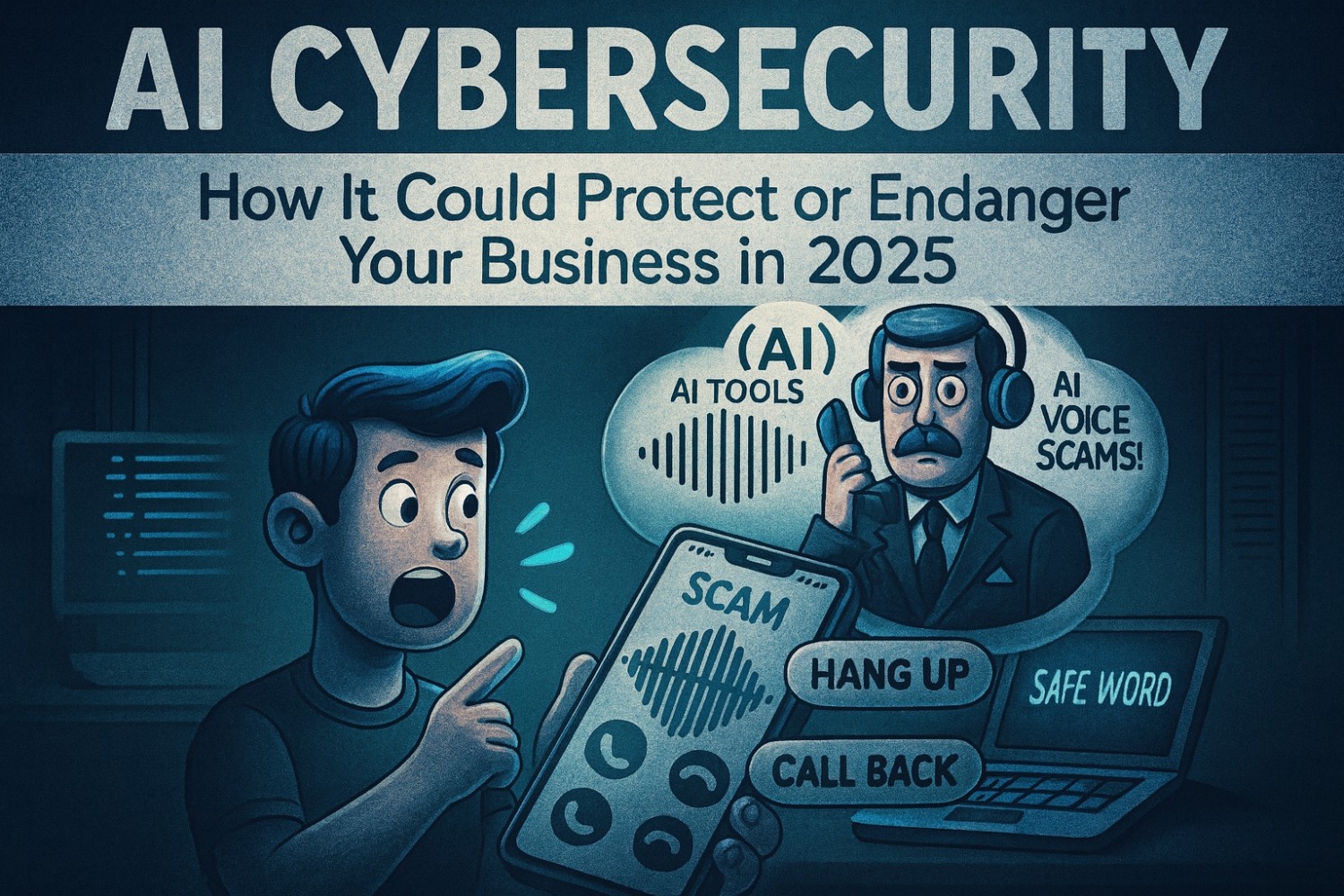
AI cybersecurity scene, hand-drawn vintage IT office: worker points to phone marked “SCAM”; bubble shows AI voice scammer; laptop says “SAFE WORD”

AI Cybersecurity in 2025: Smart Shield or Silent Sabotage?

AI Cybersecurity: It all starts with a call,It’s Monday morning. You’re sipping your coffee, ready to take on the week. Then a voice message from your “CEO” arrives urgent, precise, impossible to ignore. The voice is identical, down to their tone and quirks. But it’s not them. It’s an AI-generated clone, designed to trick you into transferring money. One wrong click, and your business accounts could be drained in minutes. This is the new reality of AI in 2025. Artificial intelligence has changed the rules. Both defenders and hackers now use the same technology. The winner? The one that’s prepared. How AI Cybersecurity Protects Businesses When used for good, AI Cybersecurity acts like a 24/7 digital bodyguard. Centrend example: Our team has seen AI-powered monitoring stop phishing emails in under a minute, before they even reached an inbox. When AI Cybersecurity Fails AI isn’t flawless and without human oversight, mistakes can be costly. Hackers target blind spots that AI can’t detect. When Hackers Use AI Cybersecurity Against You Cybercriminals are using AI to attack faster and smarter: Real-world impact: Even seasoned executives have been fooled by AI-driven phishing scams that looked completely authentic. How to Stay Ahead in 2025 Winning in cybersecurity now means pairing AI with human intelligence: Partner with experts – Work with Centrend, a cybersecurity provider who understands both the power and risks of AI. The Bottom Line AI Cybersecurity is no longer optional. It’s here. It’s evolving. It can be the shield that protects your business, or the sword that cuts it down. The question isn’t if AI will impact your business.It’s whether it will protect you… or attack you. 📞 Contact Centrend today to schedule your AI-Powered Cybersecurity Assessment and make sure AI is working FOR YOU, not AGAINST YOU.

AI Cybersecurity in 2025: Smart Shield or Silent Sabotage? Read More »

How Hackers Choose Their Targets: A Day in the Life of a Hacker

Cyberattacks don’t always start with brute force they begin with quiet observation. If you’ve ever wondered how hackers choose their targets, it’s not about high-tech tools or dramatic scenes from a movie. It’s about identifying soft entry points your business may not even realize exist and exploiting them before you ever know they’re there. Morning Recon: How Hackers Identify Vulnerable Systems I start my day like anyone else Coffee in hand, screen glowing. But instead of checking emails for meetings, I scan the digital streets for Vulnerabilities. I’m not hunting for high-profile names. I’m hunting for weak spots: Why try to crack a safe when someone leaves the front door wide open? Midday Tactics: How Hackers Exploit Human Behavior Once I find a likely target, I don’t attack the firewall I attack the person. People are the easiest way in. I send a spoofed invoice, a password reset email, or an urgent message from “the CEO.” It looks normal. Feels familiar. It only takes: And just like that I’m in. Afternoon Priorities: How Hackers Pick the Most Profitable Victims Not all targets are worth it. I want leverage. So, I look for industries where downtime equals disaster: That’s how I choose who to attack not based on size, but on vulnerability and value. Evening Payout: How Hackers Execute and Disappear By evening, I’m already deep inside a system. Sometimes I stay quiet, collecting logins, downloading data.Other times, I lock the entire network and leave a message:“Pay me, or lose it all.” Then I vanish. Tomorrow, I’ll wake up and do it again. What This Means for Your Business This “day in the life” isn’t fiction.This is exactly how hackers choose their targets every day. They look for: The good news? You don’t have to make it easy. At Centrend, We Close the Easy Doors At Centrend, we specialize in stopping threats before they start. Here’s how we protect you: We don’t chase fire drills. We prevent them. Don’t Let a Hacker Choose You. Secure Your Business with Centrend. 📞Book your FREE CyberDefense Risk Assessment today 🌐Visit us on centrend.com No pressure. No jargon. Just a clear look at where your vulnerabilities are and how to fix them before a hacker finds them.

How Hackers Choose Their Targets: A Day in the Life of a Hacker Read More »

BitLocker Recovery Key Management: Protection or Risk?

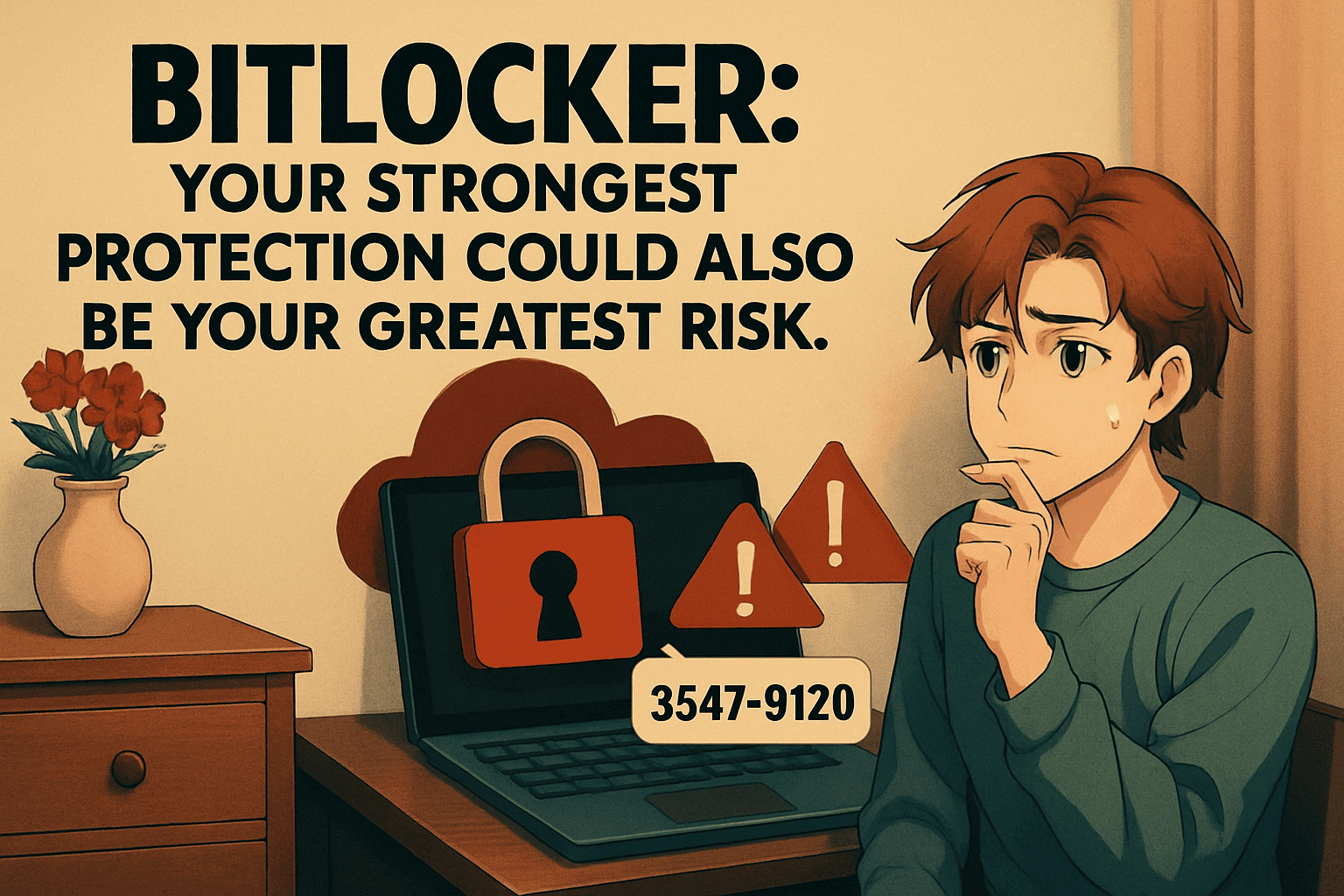
“Illustration of BitLocker data encryption showing a secure lock on a laptop, representing business data protection and recovery key management.” BitLocker is One of the Most Powerful Tools for securing Business Data, but without proper BitLocker Recovery Key Management, it can become your biggest liability. Many businesses don’t realize that Losing a Recovery Key means Losing Access to critical files forever. At Centrend, we’ve seen how one misplaced key can lead to: Here’s how to protect your company before it’s too late. What Is BitLocker and Why It Matters for Businesses BitLocker is Microsoft’s Built-In Data Encryption Tool for Windows devices. It encrypts your entire Hard Drive, ensuring that if a Laptop or Workstation is Lost or Stolen, your sensitive files remain inaccessible to outsiders. Businesses that Benefit most from BitLocker include: But here’s the Catch: If your system locks, the only way to recover your data is with the BitLocker Recovery Key. NO RECOVERY KEY = NO ACCESS. No Exceptions. Why Losing a BitLocker Recovery Key Is a Business Disaster Losing a Recovery Key isn’t rare, it happens More Often than Most Business Owners realize. Some common triggers include: Without the Recovery Key, Businesses can Face: All because a key was Misplaced, Mishandled, or Never Backed Up Properly. How to Secure Your BitLocker Recovery Key Installing BitLocker is just the first step, Real Protection comes from managing your recovery keys correctly. Without them, Businesses Risk Losing Permanent Access to Critical Data. Best Practices: Your BitLocker recovery key is the Master Key to your Business Vault. If it’s lost, no one, not even Microsoft, can unlock your files. Protect Your Business Before It’s Too Late BitLocker is a Powerful Cybersecurity Tool, but without proper recovery key management, it’s a Ticking Time Bomb. At Centrend, we Help Businesses: “Don’t wait until you’re locked out of your Own Business Data.“ [Book Your FREE Data Security Assessment Today] We’ll review your Encryption Setup, Identify Risks, and Ensure your Keys are Always Safe, Secure, and Recoverable.

BitLocker Recovery Key Management: Protection or Risk? Read More »

The True Cost of Cybersecurity Complacency: Why New England Small Businesses Can’t Afford to Wait

Every week, another headline emerges about a major corporation falling victim to a cyberattack. But while these stories dominate the news, a quieter crisis is unfolding across New England: small and medium-sized businesses are being targeted at an alarming rate, often with devastating consequences that never make the evening news. The Small Business Cybersecurity Myth Many small business owners operate under a dangerous assumption: “We’re too small to be a target.” This couldn’t be further from the truth. In fact, 43% of cyberattacks target small businesses, and the reasons are simple: The Real Impact Goes Beyond Headlines When a small business suffers a cyberattack, the consequences extend far beyond the initial breach:Financial Devastation: The average cost of a data breach for small businesses is $2.98 million. For many small businesses, this represents an existential threat.Operational Paralysis: Ransomware attacks can shut down operations for days or weeks, halting revenue generation while expenses continue to mount.Customer Trust Erosion: Once customers lose confidence in your ability to protect their information, rebuilding that trust can take years – if it’s possible at all.Legal and Regulatory Consequences: Data breaches often trigger legal obligations and potential fines, especially for businesses handling sensitive information like healthcare records or financial data. Common Vulnerabilities in Small Business Environments Most small businesses unknowingly operate with significant security gaps:Outdated Software: Running older versions of operating systems and applications that no longer receive security updates.Weak Password Policies: Using simple passwords or sharing credentials across multiple systems and users.Unprotected Email Systems: Email remains the primary attack vector, yet many businesses lack proper email security measures.Inadequate Backup Systems: Having backups that are connected to the network (and therefore vulnerable to ransomware) or backups that aren’t regularly tested.Unsecured Remote Access: Especially relevant in today’s hybrid work environment, many businesses provide remote access without proper security protocols. The Cybersecurity Investment Mindset Shift Smart business owners are beginning to view cybersecurity not as an expense, but as business insurance. Just as you wouldn’t operate without general liability insurance, operating without proper cybersecurity protection is an unnecessary risk in today’s digital landscape. Consider this perspective: The cost of implementing comprehensive cybersecuritymeasures is typically less than one month’s revenue. The cost of recovering from a successful cyberattack can exceed an entire year’s profits. Essential Cybersecurity Components for Small Businesses Effective small business cybersecurity doesn’t require enterprise-level complexity, but it does require comprehensive coverage:Multi-Factor Authentication (MFA): Adding an extra layer of security beyond passwords forall business-critical systems.Regular Security Training: Ensuring employees can identify and respond appropriately to phishing attempts and social engineering tactics.Automated Patch Management: Keeping all systems and software current with the latest security updates.Professional Email Security: Advanced filtering and protection that goes beyond basic spam filters.Secure, Tested Backups: Regular backups stored offline or in immutable cloud storage, with regular recovery testing.Network Monitoring: Continuous monitoring that can detect unusual activity and respond quickly to potential threats. The Regulatory Landscape is Changing New England businesses must also consider the evolving regulatory environment. Laws like the Massachusetts Data Protection Regulation and various federal requirements are making cybersecurity not just a business necessity, but a legal obligation. Non-compliance can result in significant fines and legal exposure, making cybersecurity investment both a protective and compliance measure. Building Your Cybersecurity Strategy Developing effective cybersecurity doesn’t happen overnight, but it should start immediately: The Cost of Waiting Every day you delay implementing proper cybersecurity measures is another day your business remains vulnerable. Cybercriminals don’t take holidays, and they don’t distinguish between businesses that are “planning to improve security” and those that haven’t considered it at all. The question isn’t whether your business will face a cyber threat – it’s whether you’ll be prepared when it happens. In today’s interconnected business environment, cybersecurity isn’t a luxury or an optional upgrade. It’s as fundamental to business operations as having reliable electricity or a functioning phone system. The businesses that thrive in the coming years will be those that recognize cybersecurity asa competitive advantage, not just a necessary expense. As demonstrated by Centrend, Inc. investing in advanced security tools, regular employee training, and proactive measures can go a long way in mitigating the impact of cyber threats. The fight against cyber threats is an ongoing battle, and companies like Centrend, Inc. are at the forefront, ready to adapt and evolve to protect their data and the data of their clients. Contact us today!

The True Cost of Cybersecurity Complacency: Why New England Small Businesses Can’t Afford to Wait Read More »

How To Beat The Hackers This Year

It’s game time – and while the biggest teams are gearing up for football’s biggest day, cybercriminals are busy preparing their playbook for 2025. Just like a championship game, the battle against hackers requires strategy, teamwork and preparation. Are you ready to tackle this year’s biggest cybersecurity threats? Here’s what the experts predict for 2025 and how your business can come out on top. This Year’s Cybersecurity MVPs (Most Vicious Perpetrators) 1. AI-Powered Phishing Plays Cybercriminals are using artificial intelligence to craft highly personalized and convincing phishing e-mails that can trick even the most cautious employees. These messages look authentic, often mimicking trusted brands or colleagues. Your Defense: 2. Ransomware Blitz Ransomware continues to dominate as one of the biggest threats to businesses of all sizes. Hackers are not only encrypting files but also threatening to leak sensitive data if ransoms aren’t paid. Your Defense: 3. Supply Chain Sneak Attacks Hackers are targeting small and midsize businesses to infiltrate larger supply chains. By breaching your network, they can gain access to partners and vendors, spreading their reach. Your Defense: 4. Deepfake Decoys Deepfake technology is being weaponized to impersonate executives or colleagues, convincing employees to transfer funds or share sensitive information. Your Defense: 5. Internet Of Things (IoT) Fumbles Smart devices like printers, cameras and even thermostats are often overlooked when it comes to cybersecurity. Hackers exploit these weak points to gain access to your network. Your Defense: Your Game Plan In 2025 Winning against hackers this year requires more than just strong plays – it takes a solid game plan. Here’s how to stay ahead: Get Your Free Cybersecurity Game Plan Ready to take your cybersecurity strategy to the next level? Schedule a FREE Network Assessment today. We’ll identify vulnerabilities, provide actionable solutions and ensure your business is prepared to beat the hackers this year. Don’t let cybercriminals win the championship. With the right team and strategy, you can protect your business and stay ahead of the game. Click here to book your FREE Network Assessment now!

How To Beat The Hackers This Year Read More »

Inside Look: How Hackers Use AI To Attack Your Business

f you think hackers are only targeting Fortune 500 companies, think again. Thanks to artificial intelligence, cybercriminals now have the power to scale their attacks like never before – and small business owners are at the top of their hit list. Why? Because cybercriminals know you don’t have the resources of a big corporation but still have valuable data they can exploit. Hackers are no longer just sending poorly written e-mails or guessing passwords with slow, simplistic software. AI gives them smarter, faster tools to outthink and outmaneuver businesses that aren’t prepared. And if you don’t have a rock-solid defense, they will find a way in. Here’s how hackers are weaponizing AI and, more importantly, how you can protect yourself from becoming their next victim. AI-Powered Phishing Scams Traditional phishing attacks relied on generic, poorly written e-mails. You’ve likely read a few with spelling errors or grammatical issues. AI has upped the ante with highly personalized, convincing messages tailored to individual targets. Hackers use AI to: Example: Imagine receiving an e-mail that looks like it’s from your bank. It’s addressed to you personally, mentions your company name and references a recent “transaction attempt” that was declined. It asks you to “click here to confirm your information” or “update your credit card details to avoid account suspension.” Here’s where the attack happens: The result? Hackers have what they need to empty your account, steal sensitive business data or launch further attacks on your company. Automated Vulnerability Scanning Hackers now deploy AI to automate the process of scanning small businesses for vulnerabilities. Tools powered by AI can: Impact: Small businesses with limited IT resources often become easy prey for these automated attacks. Hackers can identify and exploit a weakness within minutes, giving them access to your systems before you even realize there’s an issue. The result? Costly downtime, data theft or even complete loss of access to your network. AI-Driven Malware AI enables hackers to create malware that evolves quickly. These malicious programs: Real Threat: AI-powered ransomware can now lock down systems faster and demand ransoms more effectively, putting small businesses at greater risk. Deepfake Technology For Social Engineering AI-generated deepfake videos and audio are no longer just tools for Hollywood. Hackers use this tech to impersonate executives or trusted contacts, convincing employees to: Example: Imagine your CFO receives a call that sounds exactly like your CEO, complete with their tone, phrasing and even their sense of urgency. The “CEO” instructs the CFO to urgently wire funds to a vendor to close a big deal. The voice is so convincing that the CFO complies without a second thought – only to discover later that the funds were sent to a fraudulent account. Deepfakes make these scams shockingly believable, leaving even the most cautious employees vulnerable to manipulation. Advanced Password Cracking AI-powered algorithms can guess passwords at lightning speed. Using techniques like pattern recognition, hackers can crack even moderately strong passwords. Tip: Multifactor authentication is no longer optional – it’s essential to combat this growing threat. How To Protect Your Business From AI-Powered Cyberthreats AI is transforming cybersecurity – for both attackers and defenders. While hackers are using AI to target vulnerabilities, businesses can also use it to bolster their defenses. Staying informed and proactive is key to keeping your business safe in this ever-evolving digital battlefield. Ready to fortify your business? Click here or call our office at 774-241-8600 to schedule a FREE Cybersecurity Assessment today to ensure your defenses are AI-proof.

Inside Look: How Hackers Use AI To Attack Your Business Read More »

Data Privacy Day: How To Protect Your Business From Costly Data Breaches

January 28 is Data Privacy Day, a global reminder of just how vital it is to keep sensitive information secure. For business owners, “data privacy” is more than just a buzzword; it’s a critical part of protecting your bottom line. Data breaches cost businesses an average of $4.35 million in 2023, according to IBM’s Cost Of A Data Breach report, and that number is only going up. The good news? With the right precautions, you can minimize your risk and avoid becoming a headline. Why Data Privacy Matters For SMBs Many small and midsized businesses assume they’re too small to be targeted by cybercriminals. Unfortunately, that’s a myth. Nearly 43% of cyber-attacks target small businesses, and most of these businesses lack the resources to recover from a significant breach. The consequences of a data breach can be devastating: What Types Of Data Do Cybercriminals Target? Hackers are primarily after: But they will exploit any data they can get their hands on! How Does Data Get Stolen? Cybercriminals are constantly innovating ways to steal data, and some of the most common methods include: It’s important to take every precaution possible to prevent your data from being compromised! Here’s how to strengthen your data privacy!  Know Your Data The first step in protecting your data is understanding what you have and where it’s stored. Conduct a data inventory to identify: Quick Tip: Only collect and store what you truly need – less data means less risk. Encrypt Everything Encryption turns sensitive data into unreadable code, making it useless to hackers without the decryption key. From e-mails to databases, encryption should be a standard practice. Pro Tip: Ensure encryption is applied both in transit and at rest for maximum security. Implement A Strong Access Control Policy Not every employee needs access to all your data. Adopt a principle of least privilege (PoLP), ensuring team members only access what’s necessary for their role. Example: Your marketing team doesn’t need to see payroll data Train Your Team Human error is a leading cause of data breaches. Regularly train employees on data privacy best practices, including: Statistic: 88% of data breaches are caused by employee mistakes, according to Stanford University research. Partner With A Trusted IT Provider Managing data privacy is complex, and SMBs often lack the resources to do it alone. A managed IT provider can help: Don’t Leave Data Privacy To Chance Data breaches don’t just cost money – they can cost your reputation or even your business. This Data Privacy Day, take the opportunity to evaluate your security practices and make necessary improvements. Start with a FREE Network Assessment to uncover your vulnerabilities and ensure your business is protected against costly breaches. Click here to schedule your FREE assessment and take control of your data privacy today! Let’s make 2025 the year your business stays one step ahead of the threats.

Data Privacy Day: How To Protect Your Business From Costly Data Breaches Read More »

Scroll to Top