Centrend

small business security

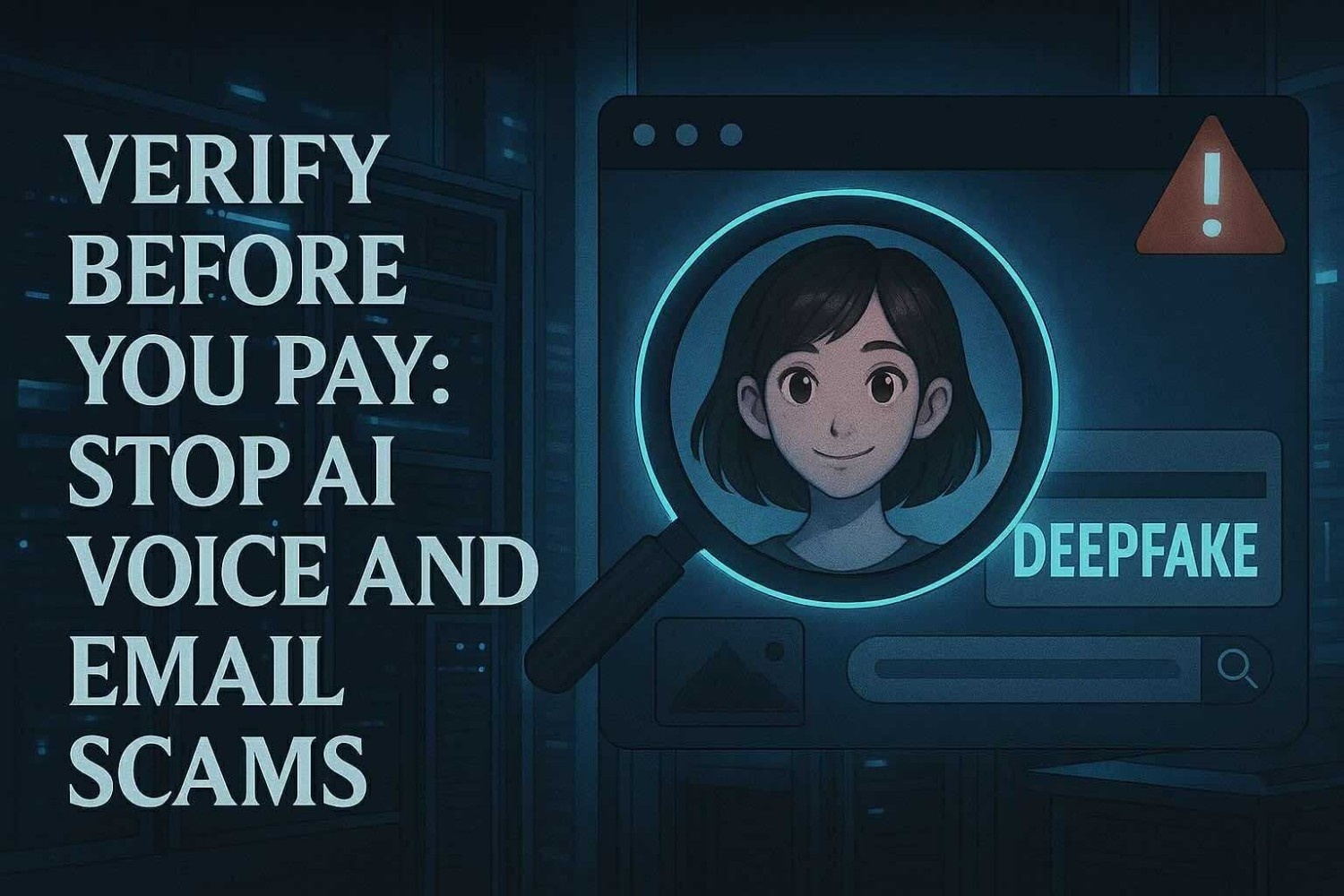
Accounts payable clerk confirms invoice by callback to stop AI voice email scams.

AI Voice Email Scams: Verify Before You Pay

Verify Before You Pay: Stop AI Voice and Email Scams.“It sounds like your boss.““It looks like your vendor.”“But it’s not.“ With AI, scammers can now clone voices, mimic writing styles, and craft emails that feel urgent, real, and impossible to ignore. One wrong click or a rushed “yes” can drain thousands from your account. The fix? Pause. Confirm. Then Pay. The Scam Setup: It’s More Convincing Than Ever The FTC warns: voice-cloning makes fake requests feel real.FBI reports: AI-generated voice and email scams are growing.IC3 data: Business Email Compromise (BEC) losses exceed $2.9 billion annually. The One-Page Playbook: Verify AI Voice Email Scams Use this for every invoice, every bank update, and every urgent request. ➤ First, call back using a known number Do not trust numbers in the message. Use the contact saved in your system or CRM.Even if it sounds like your CFO, confirm on their known number. ➤ Next, require two-person approval For risky payments or any banking changes, get two written approvals.Keep the record in one shared folder or an approval tool. ➤ Then, place first-time or changed accounts on a 24-hour hold If the account is new or modified, pause for one day. Use that time to verify by callback.Most scams rely on urgency, your delay blocks them. ➤ Meanwhile, use a code phrase for urgent asks Create a short, private phrase your team knows.If a caller cannot repeat it, stop. ➤ Also, log everything where all can see Use Teams Approvals in Microsoft 365 to record actions, names, and timestamps.Clear trails keep your team aligned and ready for audits. ➤ Finally, report every attempt If something felt off, document it.If money moved, call your bank at once and report at IC3.gov. Callback Script (read this word-for-word) Hi [Name], I’m calling on our known number because urgent payment requests can be faked, to avoid a costly mistake, please confirm the invoice number and amount, then the last four digits of the bank account on file, and finally who requested the change and when we’ll proceed only after this confirmation. Extra Guardrails that actually work 1) Start with stronger sign-ins.Move to phishing-resistant MFA and passkeys in Microsoft Entra ID. These methods block many login-theft tactics and cut off scams at the source. 2) Then watch for session-stealing kits.Some tools can grab cookies and bypass basic MFA. Upgrading to phishing-resistant methods and tightening endpoint controls reduces this risk. Train your team in 10 minutes First, run a quick role-play.Assign a “fake CFO” and a finance clerk who follows the callback script without bending the rules. Next, post a simple reminder.Place signs near desks and in Teams: No Callback, No Payment. Finally, repeat monthly.Short refreshers keep the habit strong. If you think you slipped Immediately call your bank to freeze or recall the transfer. Next, notify the vendor in case their account was spoofed. Then report the incident at IC3.gov and save every record for investigators. Want to Put This in Place? Centrend can help you: Secure your Defenses Now 📞Book your AI CyberDefense Today

AI Voice Email Scams: Verify Before You Pay Read More »
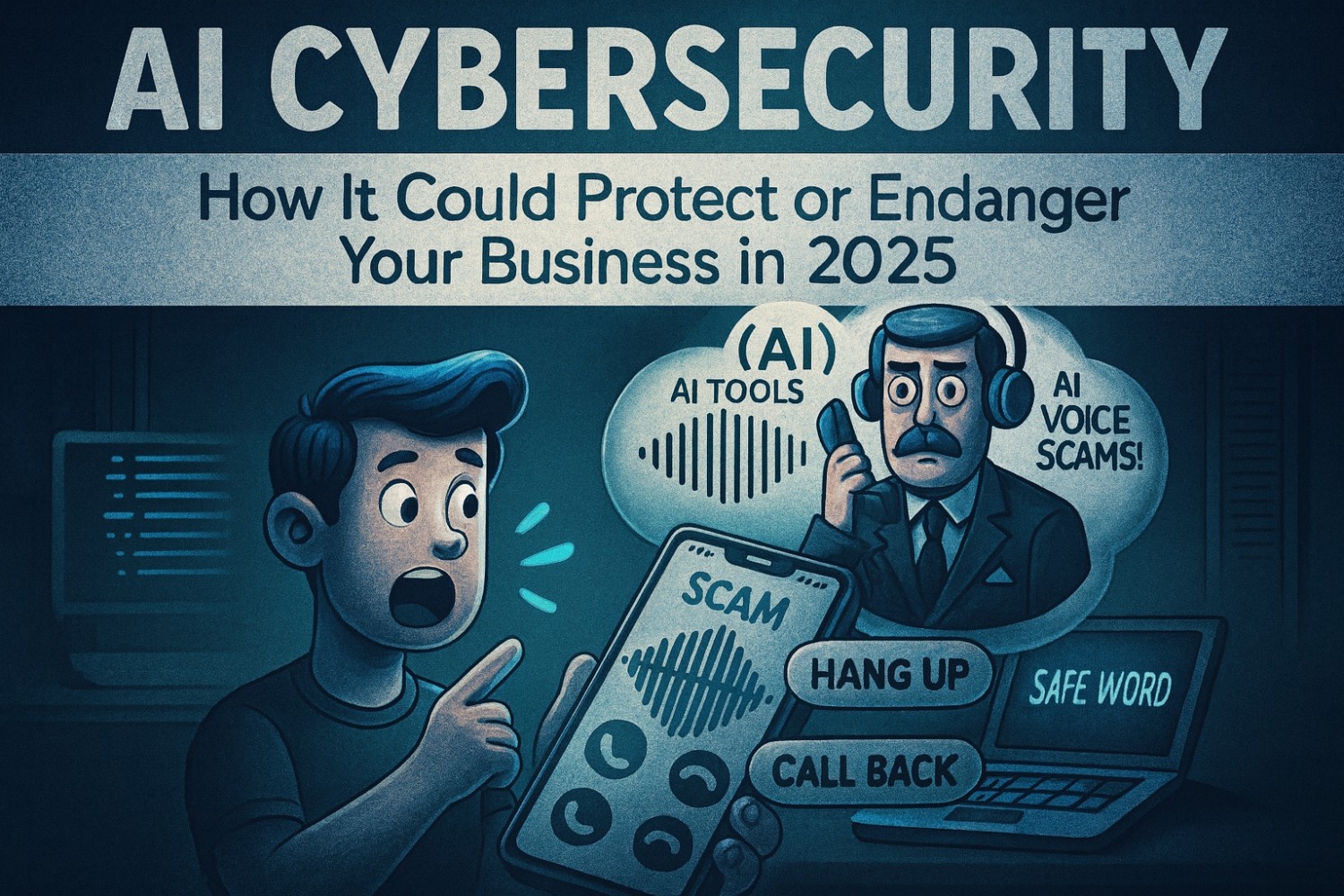
AI cybersecurity scene, hand-drawn vintage IT office: worker points to phone marked “SCAM”; bubble shows AI voice scammer; laptop says “SAFE WORD”

AI Cybersecurity in 2025: Smart Shield or Silent Sabotage?

AI Cybersecurity: It all starts with a call,It’s Monday morning. You’re sipping your coffee, ready to take on the week. Then a voice message from your “CEO” arrives urgent, precise, impossible to ignore. The voice is identical, down to their tone and quirks. But it’s not them. It’s an AI-generated clone, designed to trick you into transferring money. One wrong click, and your business accounts could be drained in minutes. This is the new reality of AI in 2025. Artificial intelligence has changed the rules. Both defenders and hackers now use the same technology. The winner? The one that’s prepared. How AI Cybersecurity Protects Businesses When used for good, AI Cybersecurity acts like a 24/7 digital bodyguard. Centrend example: Our team has seen AI-powered monitoring stop phishing emails in under a minute, before they even reached an inbox. When AI Cybersecurity Fails AI isn’t flawless and without human oversight, mistakes can be costly. Hackers target blind spots that AI can’t detect. When Hackers Use AI Cybersecurity Against You Cybercriminals are using AI to attack faster and smarter: Real-world impact: Even seasoned executives have been fooled by AI-driven phishing scams that looked completely authentic. How to Stay Ahead in 2025 Winning in cybersecurity now means pairing AI with human intelligence: Partner with experts – Work with Centrend, a cybersecurity provider who understands both the power and risks of AI. The Bottom Line AI Cybersecurity is no longer optional. It’s here. It’s evolving. It can be the shield that protects your business, or the sword that cuts it down. The question isn’t if AI will impact your business.It’s whether it will protect you… or attack you. 📞 Contact Centrend today to schedule your AI-Powered Cybersecurity Assessment and make sure AI is working FOR YOU, not AGAINST YOU.

AI Cybersecurity in 2025: Smart Shield or Silent Sabotage? Read More »

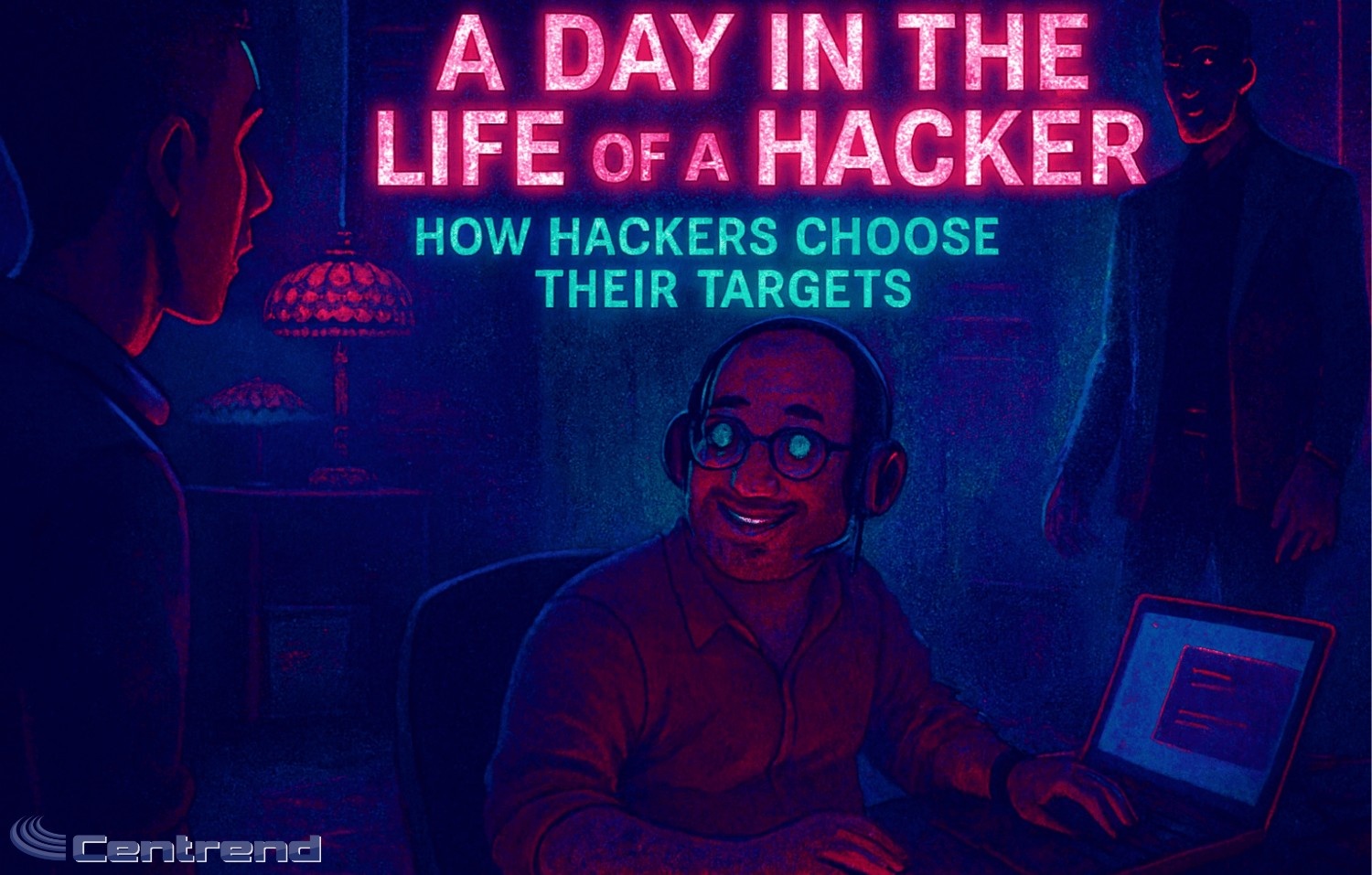
How Hackers Choose Their Targets: A Day in the Life of a Hacker

Cyberattacks don’t always start with brute force they begin with quiet observation. If you’ve ever wondered how hackers choose their targets, it’s not about high-tech tools or dramatic scenes from a movie. It’s about identifying soft entry points your business may not even realize exist and exploiting them before you ever know they’re there. Morning Recon: How Hackers Identify Vulnerable Systems I start my day like anyone else Coffee in hand, screen glowing. But instead of checking emails for meetings, I scan the digital streets for Vulnerabilities. I’m not hunting for high-profile names. I’m hunting for weak spots: Why try to crack a safe when someone leaves the front door wide open? Midday Tactics: How Hackers Exploit Human Behavior Once I find a likely target, I don’t attack the firewall I attack the person. People are the easiest way in. I send a spoofed invoice, a password reset email, or an urgent message from “the CEO.” It looks normal. Feels familiar. It only takes: And just like that I’m in. Afternoon Priorities: How Hackers Pick the Most Profitable Victims Not all targets are worth it. I want leverage. So, I look for industries where downtime equals disaster: That’s how I choose who to attack not based on size, but on vulnerability and value. Evening Payout: How Hackers Execute and Disappear By evening, I’m already deep inside a system. Sometimes I stay quiet, collecting logins, downloading data.Other times, I lock the entire network and leave a message:“Pay me, or lose it all.” Then I vanish. Tomorrow, I’ll wake up and do it again. What This Means for Your Business This “day in the life” isn’t fiction.This is exactly how hackers choose their targets every day. They look for: The good news? You don’t have to make it easy. At Centrend, We Close the Easy Doors At Centrend, we specialize in stopping threats before they start. Here’s how we protect you: We don’t chase fire drills. We prevent them. Don’t Let a Hacker Choose You. Secure Your Business with Centrend. 📞Book your FREE CyberDefense Risk Assessment today 🌐Visit us on centrend.com No pressure. No jargon. Just a clear look at where your vulnerabilities are and how to fix them before a hacker finds them.

How Hackers Choose Their Targets: A Day in the Life of a Hacker Read More »

Scroll to Top