
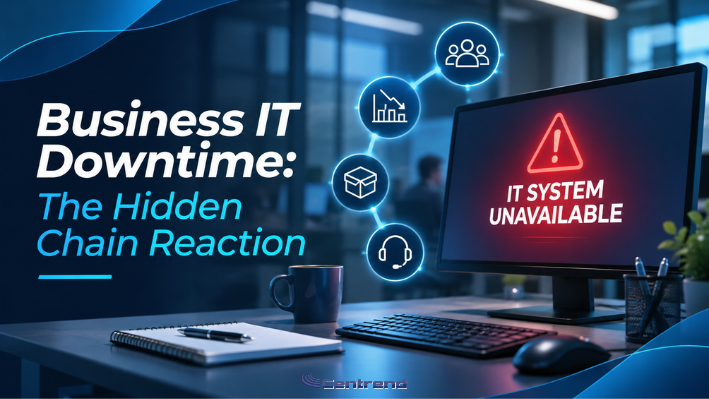
Business IT Downtime does not just stop your computers.
It can stop your entire business.
One server goes down. Employees lose access to files. Customer requests pile up. Orders get delayed. And suddenly, a technical issue becomes a business problem.
The real cost is not just the outage.
It is everything that stops working because of it.
The Problem: One Failure, Multiple Disruptions
Most businesses depend on connected technology to keep daily operations moving.
Emails.
Networks.
Cloud applications.
ERP systems.
Customer records.
Communication tools.
When one critical system fails, the impact can spread.
Employees cannot complete tasks.
Customers cannot get answers.
Departments lose access to shared information.
Work slows down while everyone waits for IT support.
And if there is no clear recovery plan, the disruption can last longer than expected.
IT downtime rarely affects just one person.
Why IT Downtime Costs More Than You Think
The most obvious problem is lost productivity.
But the hidden costs can be even more frustrating.
1. Work Comes to a Stop
When critical systems become unavailable, employees may have little choice but to wait.
Every interruption affects deadlines, workflows, and daily operations.
2. Customer Service Suffers
Delayed responses, unavailable records, and missed communications can frustrate customers.
Even a temporary outage can affect the experience people have with your business.
3. Recovery Becomes More Complicated
Without reliable backups, documented systems, and clear recovery steps, restoring operations can take more effort.
Teams may spend additional time identifying what failed, what was affected, and what needs to be restored first.
4. Business Decisions Get Delayed
When reports, ERP systems, or shared data become unavailable, leadership may lose visibility into important operations.
That makes it harder to act quickly and confidently.
5. Security Risks May Increase
Not every outage is a cyberattack.
But downtime caused by ransomware, compromised systems, or other security incidents can create additional risks around data protection and recovery.
The longer the disruption continues, the harder it can become to keep work moving.
The Real Problem Is Not Always the Outage
Technology can fail, even when businesses take precautions.
The bigger problem is being unprepared when it happens.
Ask yourself:
- Are our critical systems monitored?
- Do we have tested backups?
- Does everyone know who to contact?
- Can our team continue essential work during an outage?
- Is there a documented recovery process?
- Do we know which systems must be restored first?
If the answers are unclear, your business may have gaps that need attention.
A recovery plan should exist before you need it.
The Better Approach: Prepare Before IT Fails
Waiting for downtime before reviewing your IT environment creates unnecessary pressure.
A proactive approach helps businesses identify problems earlier, strengthen their systems, and prepare for disruptions.
That starts with five practical steps.
1. Monitor Critical Systems
Identify warning signs, recurring issues, and system problems before they become larger disruptions.
2. Maintain Reliable Backups
Keep protected backups and test whether important information and systems can actually be restored.
3. Document Your IT Environment
Clear documentation helps your team understand what systems exist, how they connect, and who handles recovery.
4. Build a Business Continuity Plan
Identify essential operations, recovery priorities, communication responsibilities, and alternative ways to keep work moving.
5. Review and Improve Regularly
Technology changes. Business needs change. Risks change.
Your IT and recovery plans should be reviewed as your business grows.
The goal is not to promise zero downtime.
It is to reduce avoidable disruptions and be better prepared when problems happen.
How Centrend Helps
At Centrend, technology support goes beyond responding when something breaks.
Our focus is helping businesses maintain stronger systems, improve visibility, reduce repeated issues, and prepare for unexpected disruptions.
Through Managed IT Services, cybersecurity, backup and disaster recovery planning, and practical technology guidance, Centrend helps businesses take a more proactive approach to IT.
The goal is clear:
Fewer surprises.
Stronger systems.
Better preparation.
One accountable technology partner.
Because reliable IT support should not begin when everything stops.
TL;DR
- IT downtime can affect entire business operations.
- Lost productivity is only part of the cost.
- Customer service, reporting, and daily workflows can suffer.
- Untested backups and unclear recovery plans can make outages harder to manage.
- Proactive IT support helps identify issues and reduce avoidable disruptions.
- Business continuity planning helps teams prepare before problems happen.
Don’t Let Downtime Decide Your Next Move
Your business depends on technology to keep moving.
When that technology fails, the last thing your team needs is confusion about what happens next.
Prepare before the outage. Protect your operations. Keep your business moving.
Centrend helps businesses strengthen their IT environment, review recovery readiness, and build a clearer plan for business continuity.
Ready to reduce downtime risks? Contact Centrend to review your IT support and recovery readiness.