
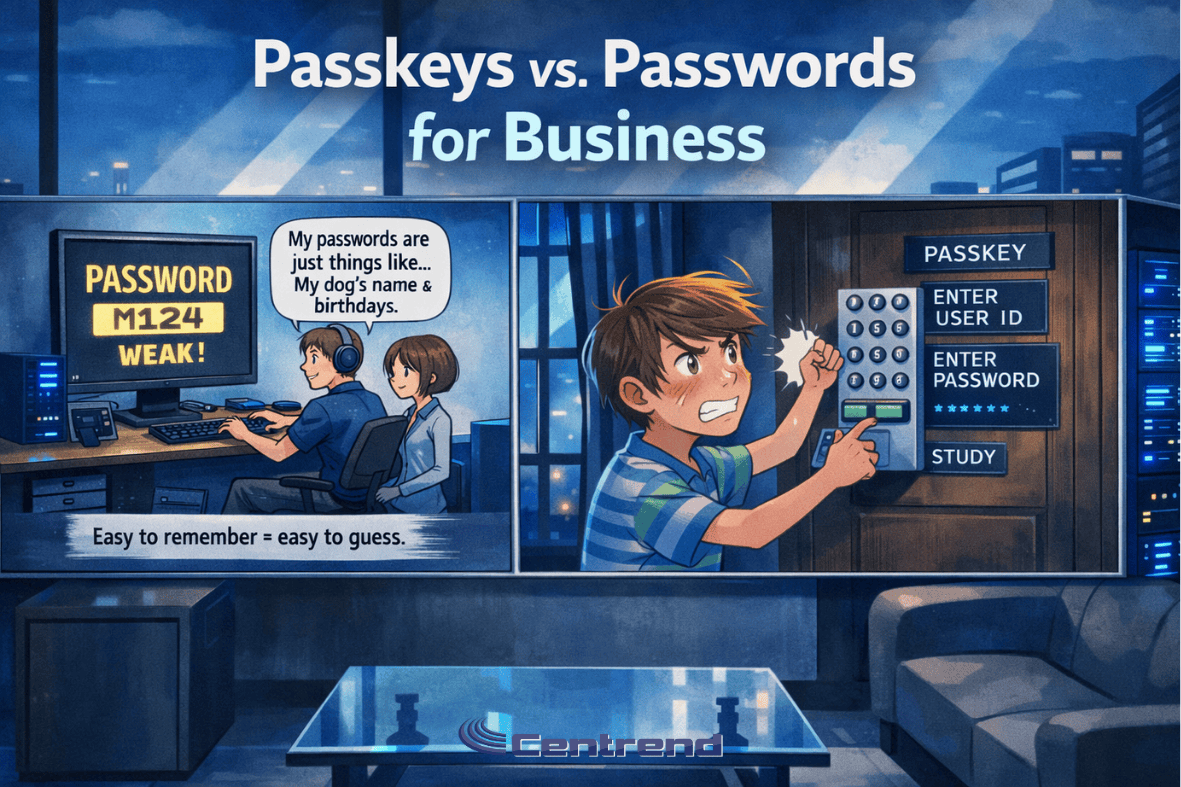
Passkeys vs Passcodes
Passwords have protected business accounts for decades, but today they are also one of the easiest ways for attackers to break in. What once worked is now one of the biggest security risks companies face.
Why it matters
Most cyberattacks start with compromised credentials. One stolen password can give an attacker access to email, financial tools, cloud platforms, and customer data.
This is no longer just an IT issue. It is a direct business risk.
The 3 Password Problems Businesses Still Face
Password Reuse Spreads Risk
Many employees reuse passwords across multiple tools. When one account gets exposed, attackers try that same login across the business.
Phishing Still Wins
A strong password cannot stop a fake login page. If an employee enters credentials into the wrong site, attackers can gain access in minutes.
Password Management Slows Teams Down
Resets, lockouts, and forgotten logins waste time and frustrate employees. Security should protect the business, not slow it down.
🔍 Dig Deeper: Why Businesses Are Moving to Passkeys
Passwords put too much pressure on people. Passkeys remove that burden and give businesses a stronger way to protect accounts.
1. Passwords Can Be Stolen
Attackers guess, reuse, and phish passwords every day. Passkeys block those common attacks because users do not type them into websites.
2. Passkeys Make Login Easier
Employees do not need to remember long, complex passwords. They can sign in with a fingerprint, face scan, or device unlock.
3. Passkeys Cut Phishing Risk
Fake login pages trick people into giving away passwords. Passkeys stop that attack because they only work with the correct site or app.
Stop Depending on Weak Login Habits
Passwords alone no longer give businesses enough protection. If you want stronger security, fewer login problems, and better protection against phishing, passkeys offer a smarter path forward.
Your team should spend less time managing passwords and more time running the business.
Protect access. Reduce risk. Move forward with confidence.