
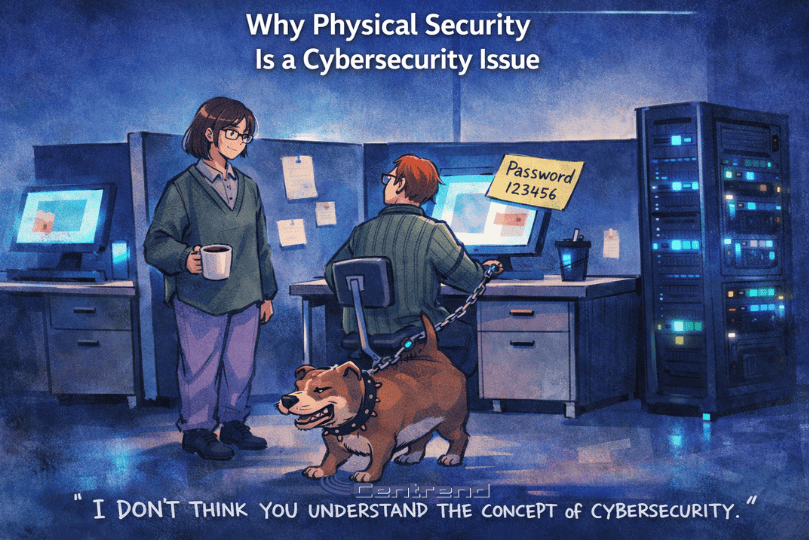
Why Physical Security is now a cybersecurity issue comes down to one simple shift: today’s cameras, access controls, alarms, and monitoring tools are connected to your network. Many businesses still treat physical security and cybersecurity as separate concerns, but that gap creates real risk. When these systems are not secured properly, they can become easy entry points for cyber threats.
Why it matters
A surveillance system is no longer just a set of cameras on a wall. It is part of your network. If those devices are outdated, poorly configured, or left unmonitored, they can expose your business to unauthorized access, stolen footage, system disruption, and larger security breaches.
The problem
Physical security tools are smarter than ever, but that also makes them more exposed.
What often gets missed:
- Default passwords: Many cameras and recorders are deployed with weak or unchanged logins.
- Outdated firmware: Old software leaves devices open to known vulnerabilities.
- Unsecured remote access: Easy access for convenience can also open the door to attackers.
- Flat networks: When surveillance devices share the same network space as critical systems, one weak point can affect more than just cameras.
The pressure point
A business may believe its surveillance system is protecting the property, while in reality that same system may be creating a blind spot in its cybersecurity.
That risk grows when:
- footage is accessible without proper controls
- devices are connected but not maintained
- vendors set up systems without long-term security practices
- teams focus on physical visibility but overlook digital exposure
The solution
Physical security needs to be treated as part of the broader cybersecurity strategy.
What stronger protection looks like:
- change all default credentials immediately
- keep firmware and software updated
- limit and secure remote access
- segment surveillance devices from core business systems
- review who can access footage and settings
- monitor the environment for unusual device activity
Dig deeper: Why this shift matters now
Modern physical surveillance systems are built on IP networks, cloud access, mobile apps, and connected management tools. That means they no longer sit outside the cyber conversation. They are part of it.
A compromised surveillance device can do more than stop recording. It can expose sensitive footage, create unauthorized access paths, and weaken trust in the entire security environment.
The bottom line
Physical security without cybersecurity is no longer enough.
If your cameras, access controls, and monitoring systems are connected, they need the same level of attention as the rest of your IT environment. Protecting your building now also means protecting the systems behind it.
What to do next
If your business relies on connected surveillance or access control systems, now is a good time to review how secure they really are.
Review your physical security environment
Identify weak points before they become larger risks
Ready to see if your physical security system is also creating cyber risk? Contact Centrend to review your environment and strengthen your protection.