
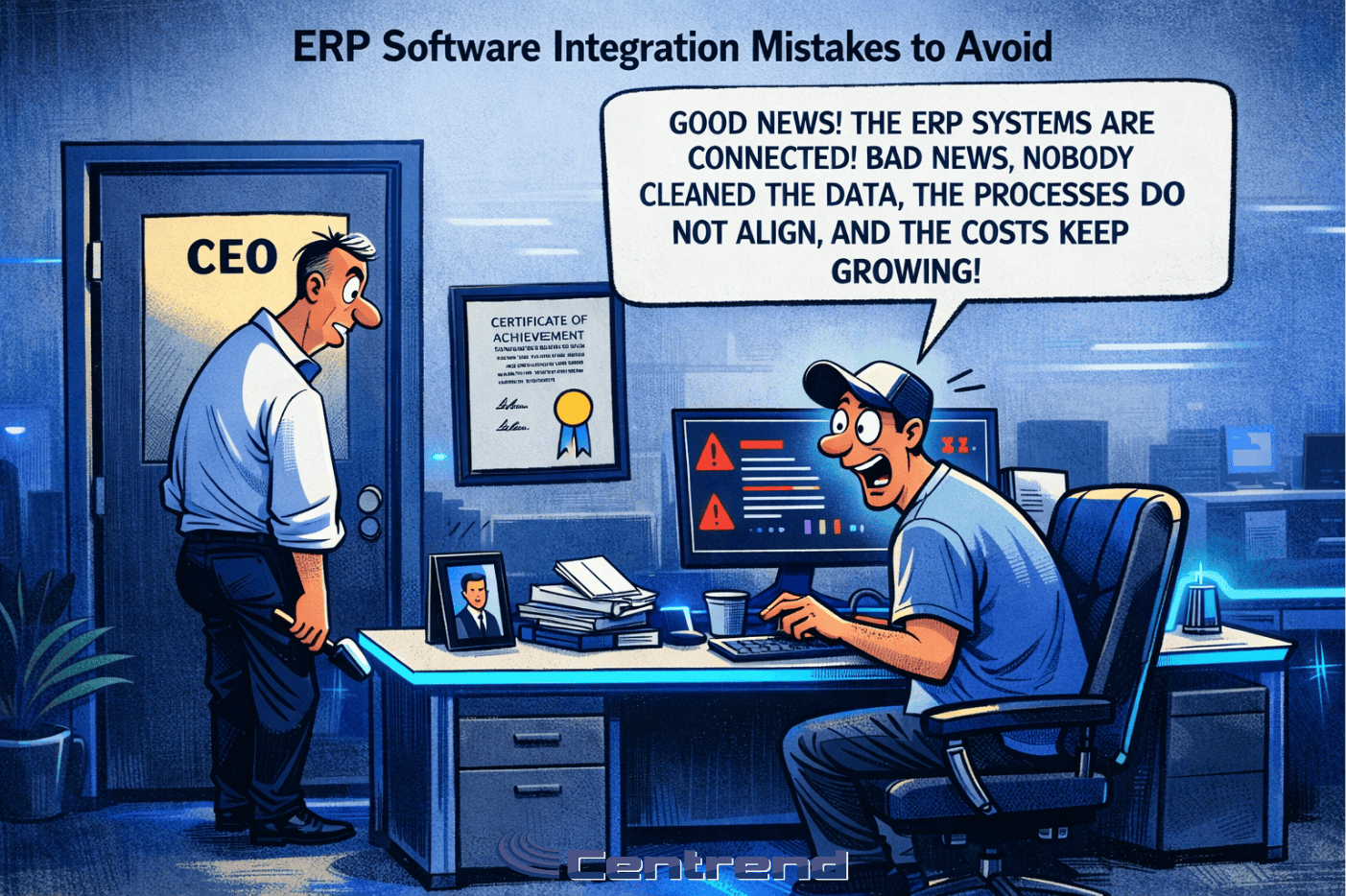
ERP software integration is supposed to bring systems together, not create more problems. But for many companies, poor integration leads to duplicated data, disconnected processes, frustrated teams, and unexpected costs. These mistakes are common, especially for growing businesses trying to move quickly without fully preparing their systems, workflows, and data. This article is designed for companies planning an ERP integration or improving an existing one, and it will walk through the key mistakes to avoid so the process becomes smoother, smarter, and more successful.
Why ERP integration goes wrong
ERP integration sounds simple on paper. Connect the systems. Sync the data. Improve visibility. Create better workflows.
But in real business operations, it is rarely that easy.
When integration is rushed or poorly planned, businesses often end up with more issues than solutions. Instead of improving efficiency, they create gaps between departments. Or instead of streamlining reporting, they introduce inconsistent data. And instead of making work easier, they make it harder for teams to trust the system.
That is why avoiding common integration mistakes is just as important as choosing the right ERP platform.
1. Starting without a clear integration strategy
One of the biggest mistakes businesses make is starting integration without a clear plan.
Many companies know they want their ERP to connect with accounting tools, CRM platforms, inventory systems, eCommerce platforms, or reporting tools. But they do not always stop to define what success should actually look like.
Without a strategy, integration becomes reactive. Teams make decisions as they go. Priorities shift. Processes get patched together. The end result is a system that may be connected technically, but not connected in a way that truly supports the business.
Before integrating anything, businesses should define:
- which systems need to connect
- what data needs to move between them
- who will use that data
- what business outcome the integration should improve
A good integration should support the business. It should not just exist because the connection is possible.
2. Ignoring data quality before integration
Bad data does not improve when moved into a new system. It only spreads faster.
This is one of the most costly ERP integration mistakes. If customer records, inventory data, financial details, or operational data are incomplete, duplicated, or outdated before integration, those same issues can affect every connected workflow after integration.
That can lead to:
- inaccurate reports
- duplicate records
- order mistakes
- billing issues
- confusion across departments
Clean data is not a small detail. It is the foundation of successful ERP integration.
Before any system is connected, businesses should review, clean, standardize, and organize their data. That step takes time, but it prevents larger issues later.
3. Trying to integrate everything at once
It is tempting to do everything in one push.
For growing businesses, the pressure to move fast can lead to large-scale integration projects where multiple systems, processes, and departments are all being updated at the same time. But that approach often creates delays, confusion, and unnecessary risk.
When too much happens at once, it becomes harder to:
- test properly
- catch issues early
- train teams effectively
- identify where problems are coming from
A phased integration approach is often more effective. Start with the most important workflows first. Focus on high-impact connections. Test them well. Then expand with more confidence.
A smarter rollout creates better control.
4. Overlooking user workflows
ERP integration is not just about systems. It is also about people.
A connection may work perfectly from a technical side, but still fail in daily operations if it does not match how teams actually work. This happens when businesses focus too heavily on software logic and not enough on real workflow use.
For example:
- sales may need access to customer updates in real time
- finance may rely on accurate transaction syncing
- operations may need inventory changes reflected immediately
- leadership may depend on clear reporting across systems
If those workflow needs are not considered early, teams will find workarounds. And once people start using spreadsheets, manual edits, or side processes to fix system gaps, integration value starts to break down.
Successful ERP integration should make work easier, not more complicated.
5. Failing to involve the right stakeholders
ERP integration should never be handled in isolation.
When only one team leads the process without enough input from operations, finance, sales, customer service, or IT, important needs are often missed. That leads to systems that work for one function but create friction for others.
The right stakeholders help identify:
- workflow gaps
- reporting needs
- data dependencies
- process risks
- real day-to-day use cases
The more aligned the teams are from the beginning, the better the integration outcome will be.
This also improves adoption. When people feel involved in the process, they are more likely to trust and use the final system.
6. Not testing enough before going live
Many ERP integration problems are not caused by the integration itself. They are caused by poor testing.
Skipping testing or doing only limited testing can leave businesses exposed to issues that affect operations immediately after launch. Data may not sync correctly. Fields may map incorrectly. Reports may pull incomplete information. Automated workflows may fail at the wrong step.
Testing should never be treated as a final checkbox.
It should include:
- data validation
- workflow testing
- exception handling
- user acceptance testing
- reporting checks
A strong test process helps businesses catch problems early, before they affect customers, teams, or revenue.
7. Underestimating change management
Even a technically successful integration can struggle if the people using it are not ready.
ERP integration often changes how teams work, where they find information, and how they complete tasks. If there is little communication, poor training, or unclear rollout support, frustration can grow quickly.
This usually shows up as:
- slow adoption
- repeated mistakes
- resistance to new processes
- over-reliance on old methods
Businesses should prepare users before launch, not after. That means clear communication, role-based training, and practical support during the transition.
Integration success is not only about system performance. It is also about user confidence.
8. Focusing only on the short term
Some businesses integrate systems just to solve an immediate issue. Maybe they need faster reporting. Or they want better visibility. And maybe they are fixing one broken process.
But ERP integration should also support long-term growth.
If the integration is built only for current needs, businesses may find themselves rebuilding the same connections later as operations become more complex. That creates added cost, wasted time, and more disruption.
A stronger approach is to ask:
- Will this integration still support us as we grow?
- Can it handle more users, more transactions, or more business units?
- Will it still work as our processes evolve?
ERP integration should solve today’s problems without creating tomorrow’s limits.
How to approach ERP integration the right way
Avoiding mistakes starts with a better process.
Businesses should approach ERP integration with:
- clear goals
- clean data
- phased implementation
- stakeholder alignment
- strong testing
- user training
- long-term planning
That does not mean the process has to be overly complex. It means it should be intentional.
The goal is not just to connect systems. The goal is to create a smoother, smarter, and more reliable way for the business to operate.
Final thoughts
ERP integration can create major value when it is done right. It can improve visibility, reduce manual work, strengthen reporting, and connect important parts of the business more effectively.
But when common mistakes are ignored, integration can quickly become expensive, frustrating, and disruptive.
For companies planning an ERP integration or improving an existing one, the smartest step is not moving faster. It is moving with more clarity.
When businesses take the time to plan carefully, prepare their data, involve the right people, and test thoroughly, ERP integration becomes far more than a technical project.
It becomes a stronger foundation for growth.
Want to build a smoother and more reliable ERP integration strategy? Request an Assesment with Centrend to explore solutions that help reduce complexity, improve visibility, and support long-term business growth.