
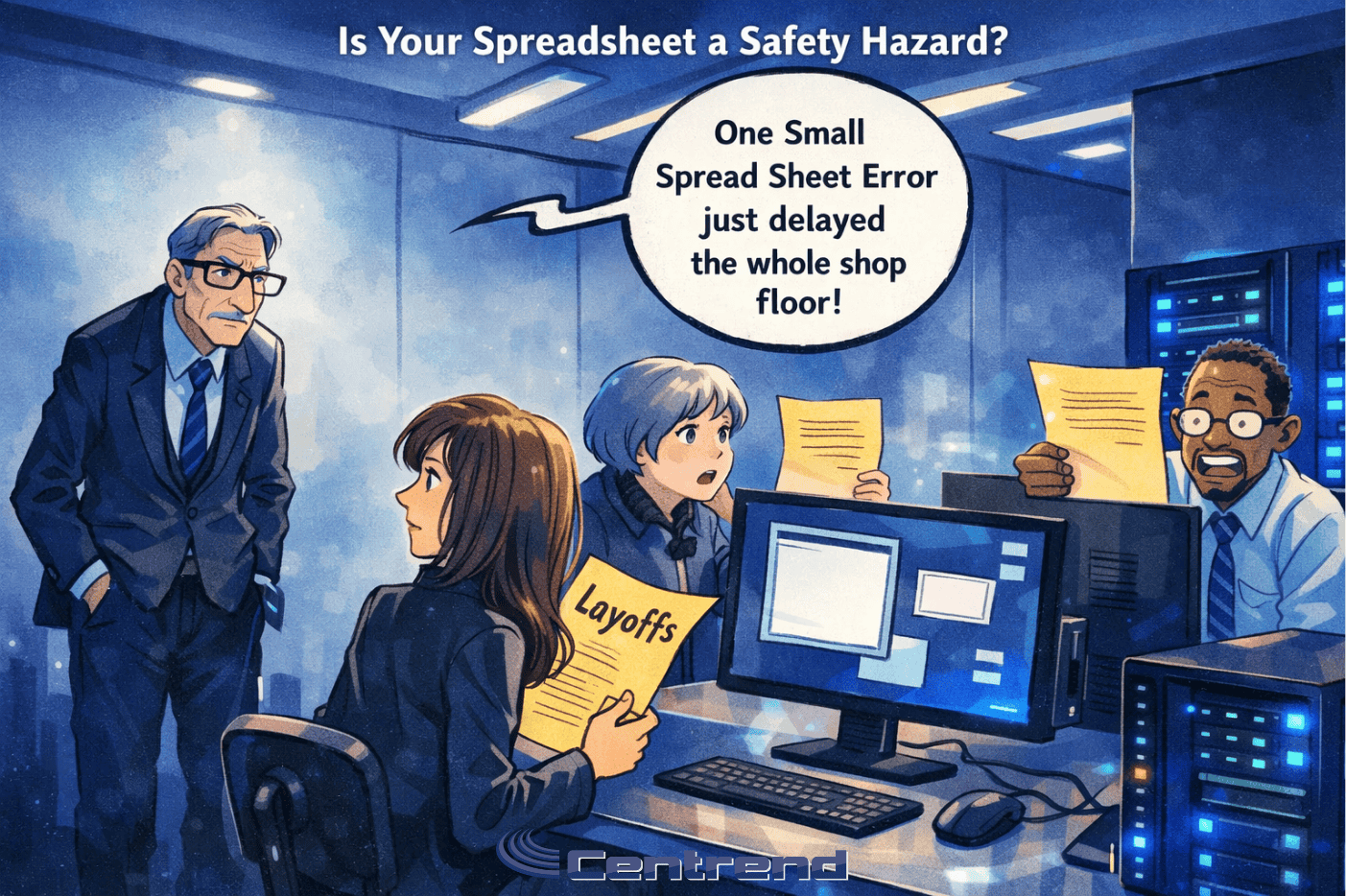
Is Your Spreadsheet a Safety Hazard?
Is your spreadsheet a safety hazard? The Big Picture: Many manufacturing owners take pride in the complex Excel workbooks that run their scheduling and inventory. But what feels like a “custom fit” is often a fragile system holding your growth hostage. Why it matters Spreadsheets are designed for static data, not the dynamic, high-stakes environment of a shop floor. Relying on them creates invisible risks that lead to missed deadlines and evaporated margins. The 3 Spreadsheet “Killers” 🔍 Dig Deeper: The Hidden Costs of Manual Tracking While Excel is “free,” the operational debt it creates is expensive. Here is why the transition to a centralized system (ERP) is inevitable for scaling: 1. Data Integrity & Corruption In a manufacturing environment, data is constantly moving. When you link spreadsheets across departments, you create a “house of cards.” One accidental cell deletion or a broken file path can corrupt weeks of scheduling data, often without anyone noticing until the wrong parts are on the line. 2. The Scaling Wall Personal attachment to a “homegrown” system often masks a lack of process. If you can’t teach your scheduling system to a new hire in a week, you don’t have a system—you have a hobby. Professional systems turn “tribal knowledge” into repeatable, scalable workflows. 3. Real-Time vs. Reactive By the time you finish the “sweeping changes” required for month-end reporting, the data is already old. A modern system provides a “live” look at your inventory and floor capacity, allowing you to make decisions based on what is happening now, not what happened two weeks ago. Stop Fighting Your Tools You shouldn’t have to be an Excel wizard just to see if you’re profitable. If you’re ready to move from “managing spreadsheets” to “managing production,” we can help.
Is Your Spreadsheet a Safety Hazard? Read More »