
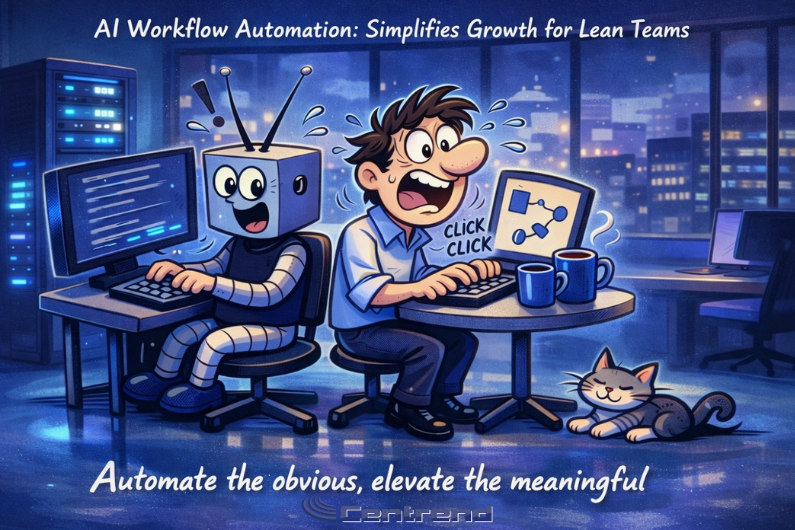
AI workflow automation, lean teams do not fail because they lack ideas.
They fail because too much time goes to repetitive work, slow approvals, and disconnected tools.
You start the week with a clear plan. By Friday, you are buried in manual tasks, chasing updates, and rewriting the same message for different channels. Output drops. Quality slips. Growth stalls.
That is the real problem.
The good news is this: you do not need a big team to scale. You need a smarter workflow.
AI workflow automation helps lean teams remove bottlenecks, speed up execution, and focus on the work that actually drives results.
The real pain lean teams face
Most lean teams deal with the same pressure points:
- Manual content creation across email, newsletter, and blog
- Slow handoffs between marketing, sales, and operations
- Repetitive edits that waste hours every week
- Campaigns measured by opens, not real conversions
- Too many tools, not enough system
When this repeats every week, growth becomes reactive instead of intentional.
Why the old way stops working
The old workflow depends on constant human effort for every small step:
- Copying data from one tool to another
- Reformatting the same message for each platform
- Rewriting content from scratch each time
- Waiting for approval on routine tasks
This model does not scale. It burns people out and makes performance inconsistent.
The better path: AI workflow automation
AI workflow automation is not about replacing your team.
It is about removing repetitive friction so your team can do higher-value work.
A practical setup looks like this:
- Input once
Add audience, industry, topic, and campaign goal. - Generate faster
AI creates draft versions for email, newsletter, and blog. - Segment automatically
Content adjusts by audience type: prospects, subscribers, or customers. - Review with human control
Your team approves tone, facts, and CTA before publishing. - Push to channels
Send to Mailchimp, publish to blog draft, and align with campaign tracking. - Learn and improve weekly
Keep what drives clicks and conversions. Remove what does not.
That is how lean teams create consistency without adding headcount.
What changes after implementation
When the workflow is structured correctly, you will see clear improvements:
- Faster campaign turnaround
- Better message relevance by segment
- Higher-quality clicks
- More site visits from the right audience
- More booked calls from targeted campaigns
- Less time spent on low-impact tasks
The key shift is simple: stop measuring activity, start measuring outcomes.
Not just opens.
Clicks, conversions, and pipeline impact.
A simple rollout for lean teams
You do not need a huge launch. Start small and build confidence.
- Week 1: choose one use case (example: weekly cybersecurity campaign)
- Week 2: create AI prompt templates by audience segment
- Week 3: connect output to Mailchimp and blog draft workflow
- Week 4: review metrics and optimize based on real performance
Small consistent steps create scalable systems.
Final takeaway
Lean teams grow faster when they stop doing everything manually.
AI workflow automation gives structure, speed, and focus, so you can produce better marketing with less strain and stronger results.
If growth matters, simplify the workflow first.
Everything else gets easier after that.
Turn cybersecurity tips into real results, Schedule a Strategy Call Today!